Buying guide
How to Compare Omega-3 Supplements
What to compare when choosing an omega-3 supplement: EPA and DHA per serving, serving size, freshness, independent testing and price per serving.
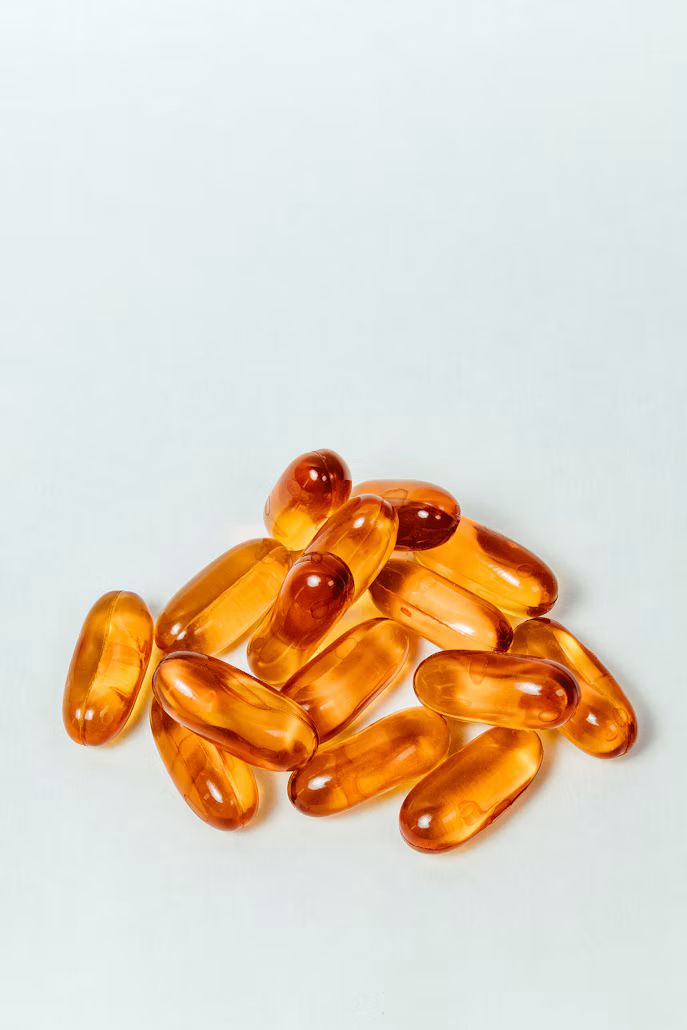
“Fish oil 1,000 mg” on the front of a bottle refers to an amount of oil, per capsule or per serving depending on the product. It doesn’t tell you how much of the omega-3s you are actually buying it for: for that, check EPA and DHA per serving on the Supplement Facts panel. Comparing omega-3 supplements is mostly a matter of turning the bottle round and doing some simple arithmetic.
This guide doesn’t recommend products or doses. It sets out what we compare, where to find it on the label, and what the label can’t tell you.
What we compare
| What we compare | Where to find it | Why it matters |
|---|---|---|
| EPA and DHA per serving | Supplement Facts panel | These are the omega-3s in fish and algal oils. The total weight of oil doesn’t tell you how much of them you get |
| Serving size | Top of the panel | Every amount is per serving, and a serving may be more than one capsule |
| Price per serving, and per 100 mg of EPA plus DHA | Price divided by servings | Makes products of different strengths comparable |
| Oxidation | Batch test results, if the maker publishes them | Product surveys have reported very different results against voluntary industry oxidation limits |
| Independent testing | The certifier’s own website | A manufacturer’s own “certified” wording isn’t a guarantee; check what the testing actually covered |
| Source of the oil | Ingredient list | Fish oil and algal oil are different products; algal oil is a vegetarian source of DHA, and some algal oils also contain EPA |
EPA and DHA, not “fish oil”
EPA (eicosapentaenoic acid) and DHA (docosahexaenoic acid) are the omega-3s found in oily fish, in fish oil supplements and in algal oils. Look for EPA and DHA listed separately, per serving, on the Supplement Facts panel. If a label gives only the weight of fish oil, you can’t tell from the label how much EPA and DHA you would get.
Here is how two made-up products compare once you do the sums:
| Product A | Product B | |
|---|---|---|
| Front of the bottle | Fish oil 1,000 mg | Omega-3 concentrate 1,000 mg |
| Serving size | 1 softgel | 2 softgels |
| EPA per serving | 180 mg | 500 mg |
| DHA per serving | 120 mg | 250 mg |
| EPA plus DHA per serving | 300 mg | 750 mg |
| Servings per bottle | 100 | 45 |
| Price | $12.00 | $24.00 |
| Price per serving | $0.12 | $0.53 |
| Price per 100 mg of EPA plus DHA | $0.04 | $0.07 |
Both fronts say 1,000 mg, but Product B gives two and a half times as much EPA and DHA per serving, while Product A costs less for the same amount of EPA and DHA. Which matters more depends on what you are comparing for. The point is that neither difference is visible on the front of the bottle.
Serving size
Check how many capsules the listed amounts refer to. A bottle of 90 capsules with a three-capsule serving holds 30 servings, which changes the price comparison completely. Our guide to reading a Supplement Facts label explains the panel line by line.
Oxidation: what product surveys have found
Omega-3 oils can oxidise, and the label won’t tell you how oxidised the oil inside is. Surveys of products on sale have tested this, with quite different results:
- New Zealand, 2015. Researchers tested 32 encapsulated fish oil supplements sold in New Zealand. Only 3 contained at least the EPA and DHA stated on the label, and most contained less than two-thirds of it. 83% exceeded the voluntary industry limit for one marker of oxidation, and only 8% met all the voluntary industry oxidation limits they checked. Best-before date, price and country of origin turned out to be poor guides to quality.
- Canada, 2015. A study of 171 omega-3 products sold in Canada found that half exceeded voluntary industry oxidation limits. Capsules without added flavouring had lower oxidation levels than liquid oils and flavoured products. Most of the authors listed a company, Pivotal Therapeutics, as their affiliation.
- New Zealand, 2017. A study of 47 fish oil products on the New Zealand market, analysed by several laboratories, found that 91% complied with their EPA and DHA content claims and that 72% to 86% met the voluntary industry limits for individual oxidation markers. Almost all met the less stringent limits used by the European and British pharmacopoeias and Australian authorities. The authors work for GOED, an omega-3 industry trade association, or for laboratories that are its members.
- United States, 2020. A study of the 48 most widely sold EPA and DHA supplements in the US, each tested by at least three laboratories, concluded that most had nutrient content consistent with their labels and oxidation levels within industry and pharmacopoeial quality requirements. It also found that 48% contained less EPA and DHA than declared, although within the current legal range, that results for the same product varied markedly between laboratories, and that nearly half of the 17 products that could be fully assessed missed at least one quality parameter. Funding came from GOED and the chemistry department at the University of California, Davis.
Surveys can disagree because they look at different markets and products, buy and test them at different times, and use different analytical methods. Taken together, they don’t support a general conclusion that most fish oil supplements are oxidised or mislabelled, but they do show why a label alone can’t settle the question for a particular product. If a manufacturer publishes independent test results for a specific batch, that tells you more than words like “pure” or “fresh” on the pack.
Independent testing
Words like “verified” or “certified” used by the manufacturer itself don’t necessarily guarantee quality. If a product carries a seal from an independent testing organisation, look it up on that organisation’s own website: check what the testing covered, such as EPA and DHA content, oxidation or contaminants, and whether that exact product is listed.
Fish oil, algal oil and prescription omega-3s
Many omega-3 supplements are made from fish oil. Algal oil, made from algae, is a vegetarian source of DHA, and some algal oils also contain EPA. You may also come across prescription omega-3 medicines. Their composition differs from typical supplements, and they are tested and regulated as drugs, so they aren’t the same kind of product.
What the label can’t tell you
- Whether the contents match the label. One 2015 survey in New Zealand found that most of the products it tested contained less EPA and DHA than stated; later surveys in New Zealand and the US found much higher compliance with label claims.
- How oxidised the oil is. That needs laboratory testing.
- Whether you need it. That depends on your diet and health. Side effects are usually mild, such as an unpleasant taste, bad breath, heartburn, nausea or diarrhoea, but if you take regular medication or have a health condition, a doctor or pharmacist can help you decide.
Sources
The research and official guidance this article draws on.
- Omega-3 Supplements: What You Need To Know. National Center for Complementary and Integrative Health (NIH) (checked )
- Fish oil supplements in New Zealand are highly oxidised and do not meet label content of n-3 PUFA. Scientific Reports, 2015 (checked )
- Oxidation levels of North American over-the-counter n-3 (omega-3) supplements and the influence of supplement formulation and delivery form on evaluating oxidative safety. Journal of Nutritional Science, 2015 (checked )
- Omega-3 Long-Chain Polyunsaturated Fatty Acid Content and Oxidation State of Fish Oil Supplements in New Zealand. Scientific Reports, 2017 (checked )
- Ingredient label claim compliance and oxidative quality of EPA/DHA omega-3 retail products in the U.S.. Journal of Food Composition and Analysis, 2020 (checked )
- Scientific Opinion on the extension of use for DHA and EPA-rich algal oil from Schizochytrium sp. as a Novel Food ingredient. EFSA Journal, 2014 (checked )
- Using Dietary Supplements Wisely. National Center for Complementary and Integrative Health (NIH) (checked )
- Dietary Supplement Labeling Guide: Chapter IV. Nutrition Labeling. U.S. Food and Drug Administration (checked )
This article is general information, not medical advice. Whether a supplement suits you depends on your health, diet and any medication you take, which a doctor or pharmacist can help you weigh up.
Who wrote this
Nourlume is an independent online publication about supplements, skincare and everyday wellness. Pieces credited to Nourlume rather than a named writer follow our editorial policy, which explains how we research, source and update our work.