Comparison
EPA vs DHA: The Two Omega-3s on Your Supplement Label
EPA and DHA are the two omega-3s in fish and algal oils. What each is linked to, what EFSA says about amounts and safety, and how to read them on a label.
Affiliate links. Some links on this page are affiliate links: if you buy through them, Nourlume may earn a commission at no extra cost to you. Affiliate relationships do not determine our editorial conclusions. About affiliate links

In this article (5)
Omega-3 labels list two names you’ll see on most fish oil supplements: EPA (eicosapentaenoic acid) and DHA (docosahexaenoic acid). They are related fats, they usually come together, and they are often discussed as if they were one thing. They aren’t quite, and the ratio between them is one of the main ways products differ.
Comparing products? Our comparison of five omega-3 supplements sold on iHerb lists EPA and DHA per serving for each one.
EPA and DHA at a glance
| EPA | DHA | |
|---|---|---|
| Full name | Eicosapentaenoic acid | Docosahexaenoic acid |
| Main sources | Oily fish, shellfish, fish oil; some algal oils | Oily fish, shellfish, fish oil; most algal oils |
| EU-authorised claims (at 250 mg a day) | Together with DHA: normal function of the heart | Normal brain function and normal vision; together with EPA: normal function of the heart |
| EFSA safety view on supplements (adults) | Up to 1.8 g a day alone raised no safety concerns | Up to about 1 g a day alone raised no safety concerns for the general population |
| Effect on LDL cholesterol in EFSA’s review | No significant effect up to 4 g a day | About a 3% rise at 2–4 g a day |
Both are long-chain omega-3s. The omega-3 in flaxseed, chia, walnuts and some plant oils is ALA (alpha-linolenic acid), a shorter fat. When a label says “omega-3” without EPA or DHA figures, it may be ALA, which is a different fat from EPA and DHA.
Choose by situation
From 8 labels we checked · no ratings, no “best”
Already know what you need? These are the labels that fit each situation.
Most EPA + DHA per serving
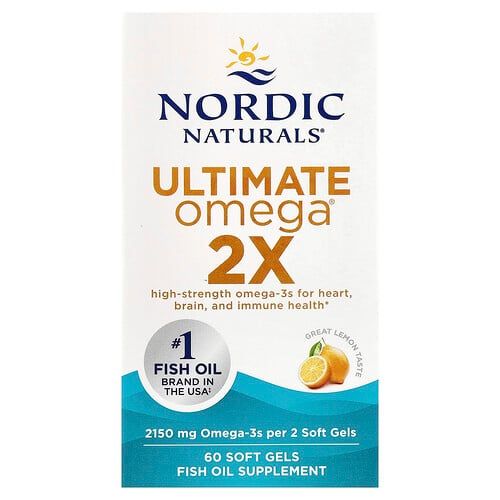
Nordic Naturals Ultimate Omega 2X, Lemon
2,000 mg EPA + DHA per serving (2 softgels) · triglyceride form
The most of the 8 labels we checked.
Fewest softgels per serving
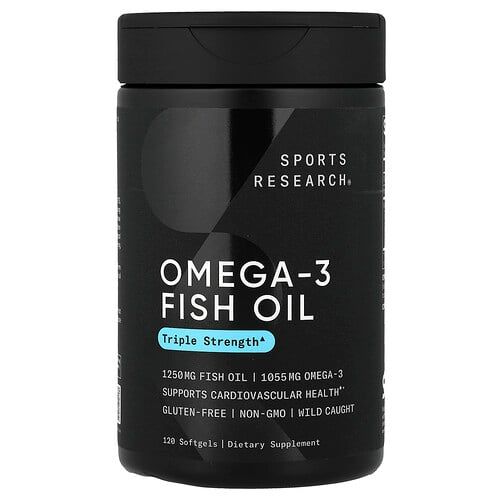
Sports Research Omega-3 Fish Oil, Triple Strength
1,000 mg EPA + DHA per serving (1 softgel) · triglyceride form
One of 3 labels here with 1 softgel per serving.
Concentrated: 70%+ purity
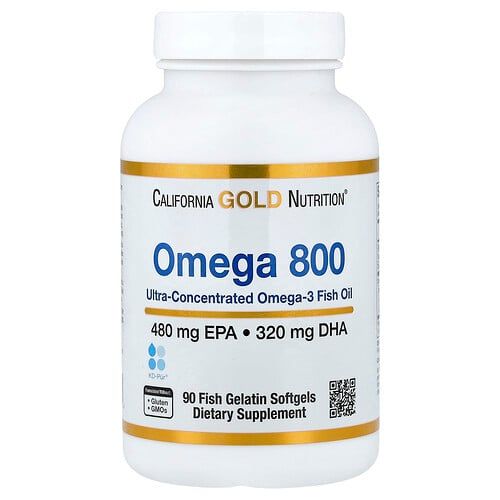
California Gold Nutrition Omega 800 Fish Oil
800 mg EPA + DHA per serving (1 softgel) · triglyceride form
800 mg of EPA + DHA in 1,000 mg of oil: 80% purity, one of 3 labels here at 70% or more.
No fish: algal oil
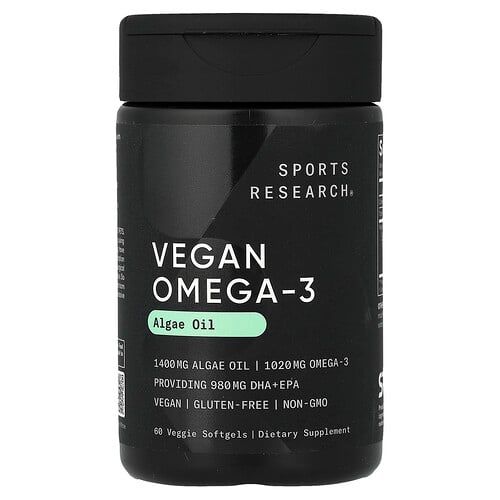
Sports Research Vegan Omega-3 (algae oil)
630 mg EPA + DHA per serving (2 softgels)
Algal oil in a plant-based softgel, labelled vegan.
Each pick follows a fixed rule applied to the label facts (labels checked October 17, 2026 – November 5, 2026); nothing here is paid for. Retailer buttons are affiliate links.
How each pick is chosen
- Most EPA + DHA per serving: The highest EPA + DHA per serving, shown only when one product clearly leads.
- Fewest softgels per serving: The fewest softgels per serving; if several share it, the one with more EPA + DHA per serving.
- Concentrated: 70%+ purity: EPA + DHA make up at least 70% of the oil weight on the label; if several, the one with the highest share.
- No fish: algal oil: Oil from algae rather than fish; if there are several, the one with more EPA + DHA per serving.
What the official bodies say
The EU’s list of permitted health claims. Food and supplement makers in the EU may say that DHA contributes to the maintenance of normal brain function and normal vision, and that EPA and DHA contribute to the normal function of the heart. Each claim comes with a condition: the beneficial effect is obtained with a daily intake of 250 mg (of DHA for the brain and vision claims, and of EPA plus DHA for the heart claim). These are “maintenance” claims for healthy people. They don’t say that omega-3s treat or prevent disease.
EFSA on safety. The European Food Safety Authority couldn’t set a tolerable upper intake level, because the data weren’t sufficient. It concluded that supplemental EPA and DHA combined up to 5 g a day, EPA alone up to 1.8 g a day, and DHA alone up to about 1 g a day don’t raise safety concerns for adults. It also noted that dietary recommendations for European adults, based on heart health, are between 250 and 500 mg of EPA and DHA a day.
NCCIH on the evidence. The US National Center for Complementary and Integrative Health summarises a 2020 review of 86 studies that found increasing EPA and DHA slightly reduced the risk of coronary events and coronary death, and a review of 23 studies in which EPA and DHA lowered triglycerides by about 15%. For depression, it reports that any effect may be too small to be meaningful, based on low-quality evidence. Side effects of omega-3 supplements are usually mild: an unpleasant taste, bad breath, heartburn, nausea or diarrhoea.
Does the EPA:DHA ratio matter?
For general use, there is little to go on. The EU claims and EFSA’s figures treat EPA and DHA together for the heart, and the reviews summarised by NCCIH looked at EPA and DHA together too. Prescription omega-3 medicines for very high triglycerides are a different case, and NCCIH notes that their composition and effects may differ from those of ordinary supplements.
What the ratio does tell you is where an oil comes from and what it is good at delivering:
- The fish oils we compared are EPA-weighted. NOW Ultra Omega-3, for example, provides 500 mg of EPA and 250 mg of DHA per softgel.
- The algal oils we compared are DHA-weighted. Nordic Naturals Algae Omega provides 195 mg of EPA and 390 mg of DHA per two soft gels.
If you are looking specifically for DHA, for example to match the 250 mg DHA figure in the EU vision and brain claims, a DHA-weighted product gets you there with less oil.
Reading EPA and DHA on a label
- Ignore the big number on the front if it is the weight of the fish oil. “1,000 mg fish oil” can contain far less EPA and DHA.
- Find the EPA and DHA lines on the Supplement Facts panel and add them up. That total is the most useful figure for comparing products.
- Check the serving size. A “per serving” amount may need two or three softgels.
- Look for total omega-3s, which can include smaller amounts of other omega-3s such as DPA.
Our guide to comparing omega-3 supplements covers freshness, testing and price per serving.
EPA and DHA in five real products
| Product | 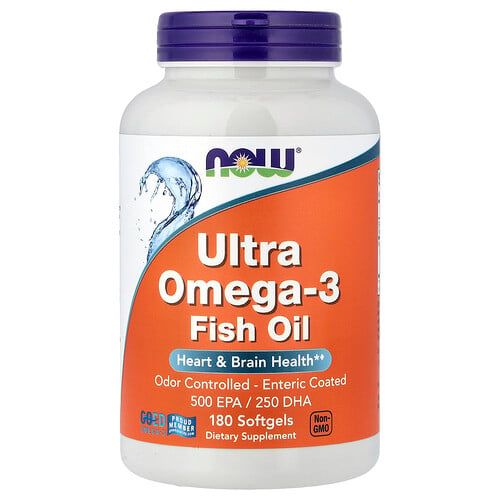 | 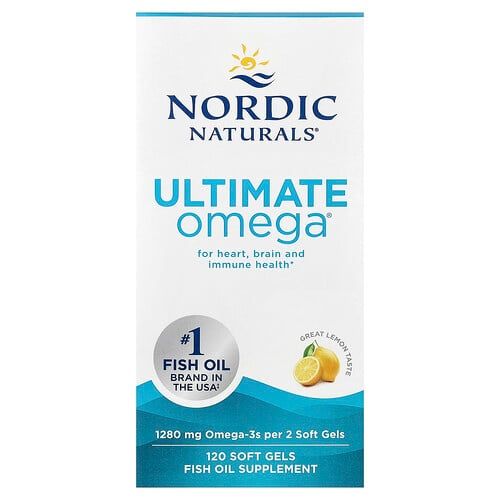 | 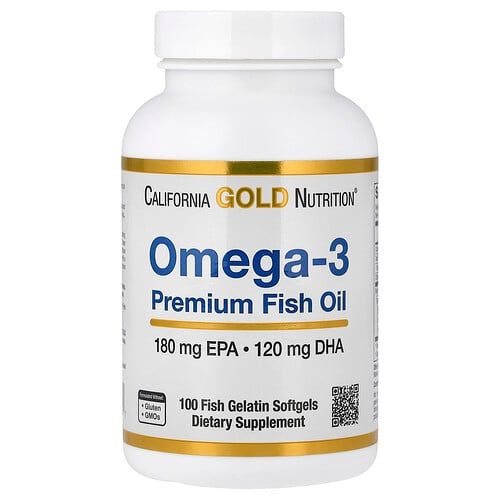 | 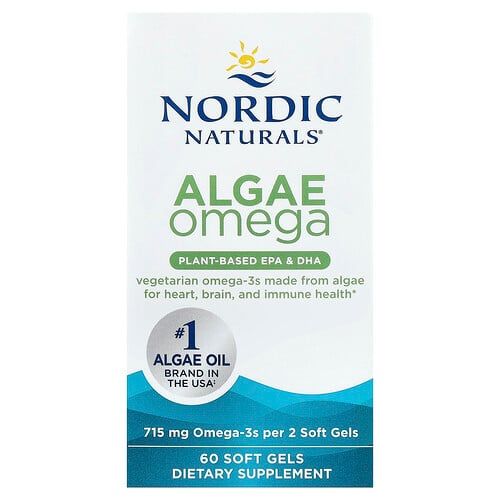 | |
|---|---|---|---|---|---|
| Serving size | 1 softgel | 2 soft gels | 2 softgels | 2 soft gels | 2 softgels |
| EPA + DHA per serving | 750 mg (EPA 500 mg, DHA 250 mg) | 1,100 mg (EPA 650 mg, DHA 450 mg) | 600 mg (EPA 360 mg, DHA 240 mg) | 585 mg (EPA 195 mg, DHA 390 mg) | 630 mg (EPA 210 mg, DHA 420 mg) |
| Oil source | Fish oil concentrate, 1,000 mg (anchovy, sardine) | Purified deep sea fish oil (anchovies, sardines) | Fish oil concentrate, 2,200 mg (anchovy, mackerel, sardine and/or tuna) | Algal oil (marine algae) | Algal oil concentrate (life’sOMEGA), 1,400 mg |
| Where to buy |
The full comparison, with each product’s label details, is in Omega-3 Supplements on iHerb Compared.
Sources
The research and official guidance this article draws on.
- Omega-3 Supplements: What You Need To Know. National Center for Complementary and Integrative Health (NIH) (checked )
- Commission Regulation (EU) No 432/2012 establishing a list of permitted health claims made on foods. EUR-Lex, European Union, 2012 (checked )
- Scientific Opinion on the Tolerable Upper Intake Level of eicosapentaenoic acid (EPA), docosahexaenoic acid (DHA) and docosapentaenoic acid (DPA). EFSA Journal, 2012 (checked )
- NOW Ultra Omega-3 Fish Oil (label 314161); Nordic Naturals Algae Omega (label 288732). NIH Dietary Supplement Label Database (checked )
This article is general information, not medical advice. Whether a supplement suits you depends on your health, diet and any medication you take, which a doctor or pharmacist can help you weigh up. Read our medical disclaimer.
Who wrote this
Nourlume is an independent online publication about supplements, skincare and everyday wellness. Pieces credited to Nourlume rather than a named writer follow our editorial policy, which explains how we research, source and update our work.