Comparison
Triglyceride vs Ethyl Ester Fish Oil: TG, rTG and EE Explained
TG, rTG and EE are three forms of omega-3 in fish oil. How each is made, what absorption studies found, and why most labels don’t say which one you’re buying.
Affiliate links. Some links on this page are affiliate links: if you buy through them, Nourlume may earn a commission at no extra cost to you. Affiliate relationships do not determine our editorial conclusions. About affiliate links

In this article (6)
Shop for fish oil long enough and you’ll meet three sets of letters: TG, rTG and EE. They describe the chemical form the omega-3s EPA and DHA are in, and supplement marketing, particularly for “rTG” products, often presents the form as the deciding factor. This guide explains what each form is, what the absorption research actually shows, and what a label can and can’t tell you.
Comparing products? Our comparison of five omega-3 supplements sold on iHerb lists EPA and DHA per serving and the form stated on each label.
Three forms, one oil
In fish oil, EPA and DHA sit mainly in triglycerides: three fatty acids attached to a backbone of glycerol. That is the form of the oil as it comes from the fish.
A capsule of ordinary fish oil contains other fats too, so makers concentrate it to fit more EPA and DHA into each softgel. As a 2023 paper describes the process, the fatty acids are moved from the glycerol onto ethanol, giving ethyl esters, which are then concentrated by molecular distillation. Some products are sold in that form. Others go one step further and convert the concentrate back into glycerides: re-esterified triglycerides, or rTG.
| Form | What it is | Where you meet it |
|---|---|---|
| Triglyceride (TG) | EPA and DHA on a glycerol backbone, as in fish | Fish oil that hasn’t been through the ethyl-ester step |
| Ethyl ester (EE) | EPA and DHA attached to ethanol instead of glycerol | Many concentrates; prescription “omega-3-acid ethyl esters” |
| Re-esterified triglyceride (rTG) | Ethyl-ester concentrate converted back into glycerides | Concentrates sold as “rTG” or “triglyceride form” |
Two other forms exist, free fatty acids (used in some prescription products) and phospholipids, which krill oil contains; see krill oil vs fish oil. This guide doesn’t cover them.
What absorption studies found
Researchers compare forms by measuring how much EPA and DHA turns up in the blood after people take each one. The main human studies:
- A single dose, two meals (1988). In eight men eating a low-fat meal, EPA and DHA from ethyl esters were absorbed only about 20% as well as the same fatty acids taken as free acids; triglycerides reached 57–68%. When the same researchers repeated the test with a high-fat meal (44 g of fat), absorption from ethyl esters roughly tripled, to about 60%.
- The same meal effect in a larger trial (2012). In 54 adults, a prescription ethyl-ester product produced about a quarter of the blood EPA and DHA of a free-fatty-acid product during a low-fat diet. With high-fat meals the gap shrank to about 1.3-fold. The lead researcher worked for the company developing the free-fatty-acid product.
- Two weeks of daily doses (2010). 72 volunteers took about 3.3 g of EPA and DHA a day in different forms. Compared with natural fish oil, the rise in blood EPA and DHA was 124% with rTG and 73% with ethyl esters.
- Six months (2011). 150 people took the same dose of EPA and DHA (1.01 g + 0.67 g a day) as rTG or as ethyl esters. Both raised the omega-3 index, the share of EPA and DHA in red blood cells, and the rise was larger with rTG: 197% against 171% after six months.
A 2014 review of this research found the apparent bioavailability lowest for ethyl esters, but also said the studies were so different in design that firm conclusions were hard to draw, and listed the gaps: unequal doses, total fat intake not controlled, too few participants.
“rTG” isn’t always 100% triglyceride
Re-esterification doesn’t turn every molecule back into a triglyceride. According to the 2023 paper, rTG supplements are typically about 55–60% triglycerides and 38–42% diglycerides, with a little monoglyceride.
That paper reports a 16-week trial in 60 young adults comparing an oil described as more than 95% rTG (Nordic Naturals Ultimate Omega) with one described as under 70% rTG. EPA and DHA in red blood cells rose more in the first group at week 16. Two caveats: the high-rTG group also received about 10% more EPA and DHA a day (2,750 mg against 2,500 mg), and the authors include an employee and the owner of Nordic Naturals.
What the label tells you
We checked the label records of the five omega-3 supplements in our comparison in the US Dietary Supplement Label Database. Only one names the form: California Gold Nutrition lists its omega-3s as triglycerides. The other four don’t say, although Nordic Naturals Ultimate Omega is the product described as more than 95% rTG in the company-linked trial above.
| Product | 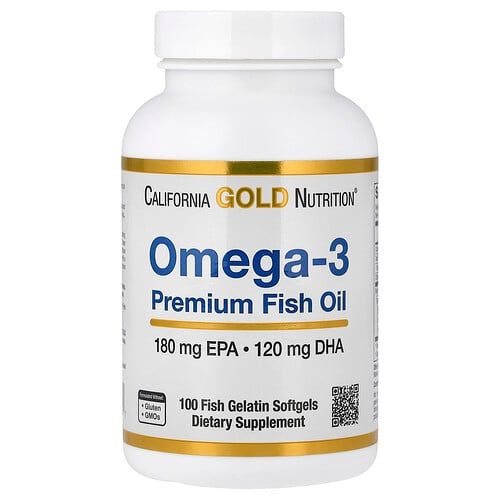 | 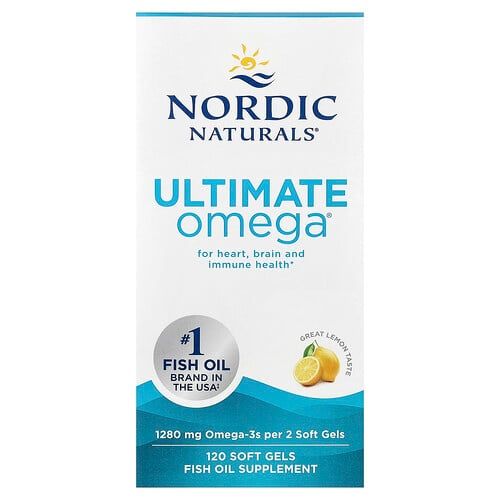 | 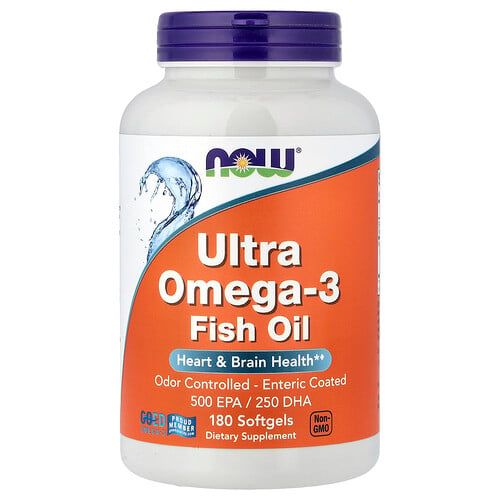 | 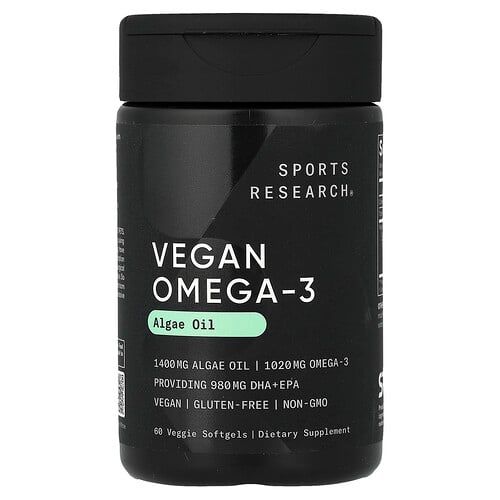 | 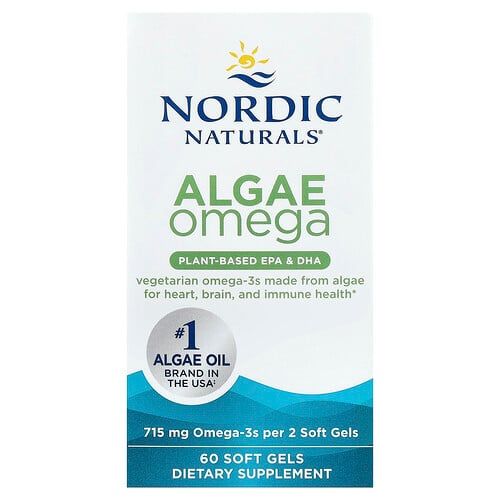 |
|---|---|---|---|---|---|
| Omega-3 form on the label | Triglycerides (stated on the label) | Not stated on the label | Not stated on the label | Not stated on the label | Not stated on the label |
| EPA + DHA per serving | 600 mg (EPA 360 mg, DHA 240 mg) | 1,100 mg (EPA 650 mg, DHA 450 mg) | 750 mg (EPA 500 mg, DHA 250 mg) | 630 mg (EPA 210 mg, DHA 420 mg) | 585 mg (EPA 195 mg, DHA 390 mg) |
| Oil source | Fish oil concentrate, 2,200 mg (anchovy, mackerel, sardine and/or tuna) | Purified deep sea fish oil (anchovies, sardines) | Fish oil concentrate, 1,000 mg (anchovy, sardine) | Algal oil concentrate (life’sOMEGA), 1,400 mg | Algal oil (marine algae) |
| Where to buy |
If the form matters to you:
- Look on the panel and in the ingredient list for “triglycerides”, “triglyceride form”, “rTG” or “ethyl esters”. Front-of-pack phrases such as “superior absorption” don’t tell you the form.
- If the label doesn’t say, ask the maker. A form named only in marketing copy isn’t on the label you can check.
- A high concentration is a clue, not an answer. A very high share of EPA and DHA in the oil usually means a concentrate, and concentrates often go through the ethyl-ester step. Whether they were converted back into glycerides isn’t visible from the numbers.
How concentrated is the oil?
The concentration (the share of the oil that is EPA plus DHA) is easy to work out when a label states the weight of oil per serving. Three of the five do:
| Product | Oil per serving | EPA + DHA | Share of the oil |
|---|---|---|---|
| NOW Ultra Omega-3 | 1,000 mg fish oil concentrate | 750 mg | 75% |
| Sports Research Vegan Omega-3 | 1,400 mg algal oil concentrate | 630 mg | 45% |
| California Gold Nutrition Omega-3 Premium | 2,200 mg fish oil concentrate | 600 mg | 27% |
A more concentrated oil means fewer or smaller capsules for the same EPA and DHA. It doesn’t tell you the form, and it says nothing about freshness, which no label shows; our guide to comparing omega-3 supplements covers what product surveys have found about oxidation.
So does the form matter?
On the evidence available:
- Ethyl esters depend more on a fatty meal. The two meal studies are the most consistent finding: taken with little fat, ethyl esters were absorbed much less; with a high-fat meal, the gap narrowed. Several of the labels in our comparison suggest taking the softgels with food.
- Triglyceride forms raised blood levels somewhat more in the studies above, including one six-month trial.
- There is no good evidence of a health difference between the forms, and the studies are few, small and mostly short.
For most comparisons, the larger differences are on the Supplement Facts panel: EPA and DHA per serving, how many capsules a serving takes, and price per 100 mg of EPA plus DHA. The EPA vs DHA guide explains the two fatty acids themselves.
If you take blood thinners or other regular medication, or are pregnant, ask a pharmacist or doctor before taking fish oil supplements, as several of these labels advise.
Sources
The research and official guidance this article draws on.
- Human absorption of fish oil fatty acids as triacylglycerols, free acids, or ethyl esters. Biochemical and Biophysical Research Communications, 1988 (checked )
- Absorption of eicosapentaenoic acid and docosahexaenoic acid from fish oil triacylglycerols or fish oil ethyl esters co-ingested with a high-fat meal. Biochemical and Biophysical Research Communications, 1988 (checked )
- Bioavailability of marine n-3 fatty acid formulations. Prostaglandins, Leukotrienes and Essential Fatty Acids, 2010 (checked )
- Enhanced increase of omega-3 index in response to long-term n-3 fatty acid supplementation from triacylglycerides versus ethyl esters. European Journal of Clinical Nutrition, 2011 (checked )
- Moderate doses of EPA and DHA from re-esterified triacylglycerols but not from ethyl-esters lower fasting serum triacylglycerols in statin-treated dyslipidemic subjects. Prostaglandins, Leukotrienes and Essential Fatty Acids, 2011 (checked )
- A novel omega-3 free fatty acid formulation has dramatically improved bioavailability during a low-fat diet compared with omega-3-acid ethyl esters: the ECLIPSE study. Journal of Clinical Lipidology, 2012 (checked )
- Omega-3 long chain fatty acid “bioavailability”: a review of evidence and methodological considerations. Progress in Lipid Research, 2014 (checked )
- Comparative membrane incorporation of omega-3 fish oil triglyceride preparations differing by degree of re-esterification: A sixteen-week randomized intervention trial. PLOS ONE, 2023 (checked )
- Dietary Supplement Label Database: Nordic Naturals Ultimate Omega (288764), NOW Ultra Omega-3 (314161), California Gold Nutrition Omega-3 Premium Fish Oil (274552), Sports Research Vegan Omega-3 (305211), Nordic Naturals Algae Omega (288732). NIH Office of Dietary Supplements (checked )
This article is general information, not medical advice. Whether a supplement suits you depends on your health, diet and any medication you take, which a doctor or pharmacist can help you weigh up. Read our medical disclaimer.
Who wrote this
Nourlume is an independent online publication about supplements, skincare and everyday wellness. Pieces credited to Nourlume rather than a named writer follow our editorial policy, which explains how we research, source and update our work.