Comparison
Algae Oil vs Fish Oil: How the Two Omega-3 Sources Compare
Algal oil and fish oil both supply EPA and DHA. How they compare on amounts per capsule, the EPA:DHA balance, absorption evidence and suitability for vegans.
Affiliate links. Some links on this page are affiliate links: if you buy through them, Nourlume may earn a commission at no extra cost to you. Affiliate relationships do not determine our editorial conclusions. About affiliate links

In this article (6)
Fish oil is the omega-3 supplement most people know. Algal oil, made from algae, is an alternative for people who don’t eat fish. Both supply the long-chain omega-3s EPA and DHA, and that is where most of the useful comparison lies: how much of each you get, and in what kind of capsule.
Comparing products? Our comparison of five omega-3 supplements sold on iHerb puts three fish oils and two algal oils side by side.
The short comparison
| Fish oil | Algal oil | |
|---|---|---|
| Source | Oily fish such as anchovy, sardine and mackerel | Algae |
| Omega-3s (in the products we compared) | EPA and DHA, more EPA than DHA | EPA and DHA, more DHA than EPA |
| EPA + DHA in the products we compared | 600–1,100 mg per serving | 585–630 mg per serving |
| Suitable for vegans | No | Yes, if the capsule is plant-based |
| Label warnings in the products we compared | Fish allergy; blood thinners | Blood thinners (on some labels) |
Choose by situation
From 8 labels we checked · no ratings, no “best”
Already know what you need? These are the labels that fit each situation.
Most EPA + DHA per serving
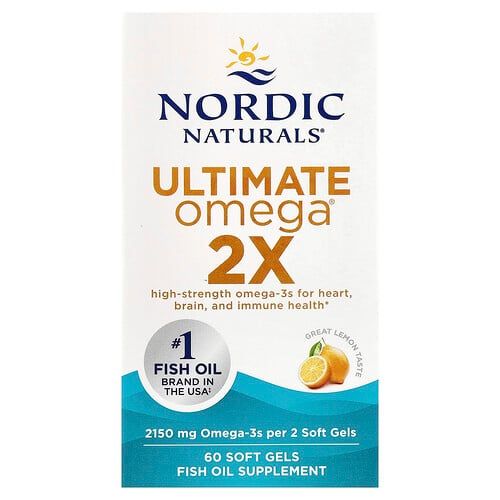
Nordic Naturals Ultimate Omega 2X, Lemon
2,000 mg EPA + DHA per serving (2 softgels) · triglyceride form
The most of the 8 labels we checked.
Fewest softgels per serving
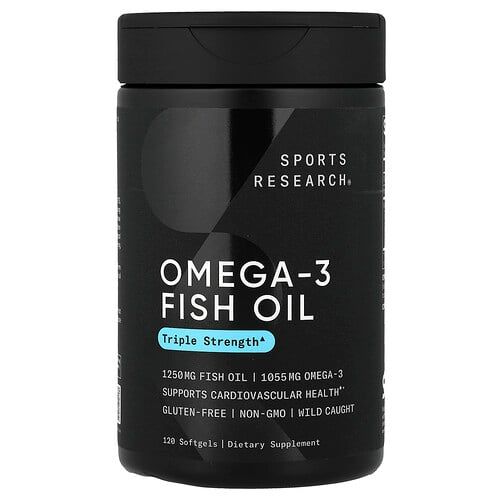
Sports Research Omega-3 Fish Oil, Triple Strength
1,000 mg EPA + DHA per serving (1 softgel) · triglyceride form
One of 3 labels here with 1 softgel per serving.
Concentrated: 70%+ purity
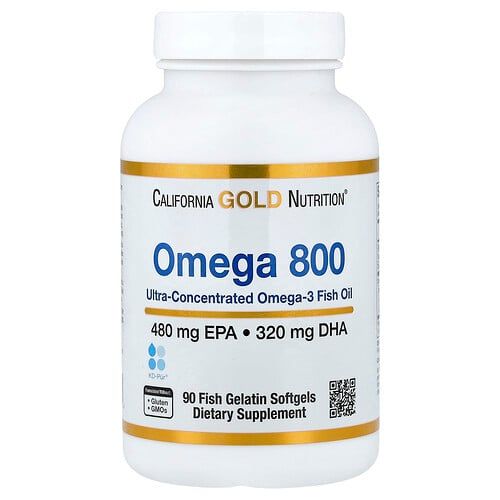
California Gold Nutrition Omega 800 Fish Oil
800 mg EPA + DHA per serving (1 softgel) · triglyceride form
800 mg of EPA + DHA in 1,000 mg of oil: 80% purity, one of 3 labels here at 70% or more.
No fish: algal oil
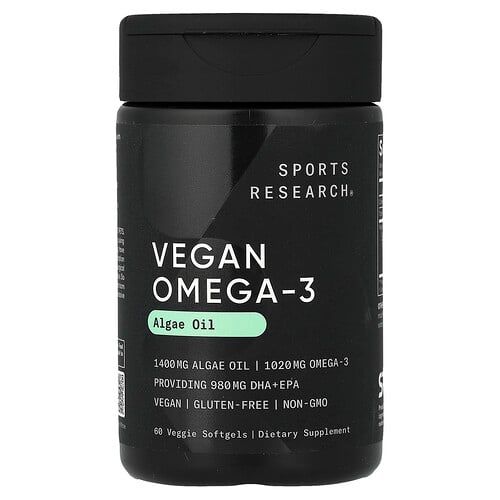
Sports Research Vegan Omega-3 (algae oil)
630 mg EPA + DHA per serving (2 softgels)
Algal oil in a plant-based softgel, labelled vegan.
Each pick follows a fixed rule applied to the label facts (labels checked October 17, 2026 – November 5, 2026); nothing here is paid for. Retailer buttons are affiliate links.
How each pick is chosen
- Most EPA + DHA per serving: The highest EPA + DHA per serving, shown only when one product clearly leads.
- Fewest softgels per serving: The fewest softgels per serving; if several share it, the one with more EPA + DHA per serving.
- Concentrated: 70%+ purity: EPA + DHA make up at least 70% of the oil weight on the label; if several, the one with the highest share.
- No fish: algal oil: Oil from algae rather than fish; if there are several, the one with more EPA + DHA per serving.
Where the omega-3s come from
NCCIH describes algal oils as a vegetarian source of DHA, some of which also contain EPA. In practice, the two algal products we compared both contain EPA and DHA, with about twice as much DHA as EPA.
Fish oils come from the bodies of oily fish. In the three fish oils we compared, the label lists anchovy and sardine, sometimes with mackerel or tuna.
Is algal DHA absorbed as well?
One direct comparison is small but clear. In a 2008 trial, 32 healthy adults took either 600 mg of DHA a day from algal-oil capsules or the same amount of DHA from cooked salmon for two weeks. DHA in the blood rose by about 80% in plasma phospholipids and about 25% in red blood cells in both groups, and the authors concluded the two sources were bioequivalent for delivering DHA.
That study compared algal oil with fish, not with fish oil capsules, and it was short. We didn’t find large trials comparing health outcomes between algal and fish oil supplements. EFSA’s safety assessment of EPA and DHA applies to both sources: it found no safety concerns for adults at combined supplemental intakes up to 5 g a day.
Amounts per capsule
Here is the clearest practical difference. Concentrated fish oils can pack more EPA and DHA into each softgel than the algal oils we found:
| Product | 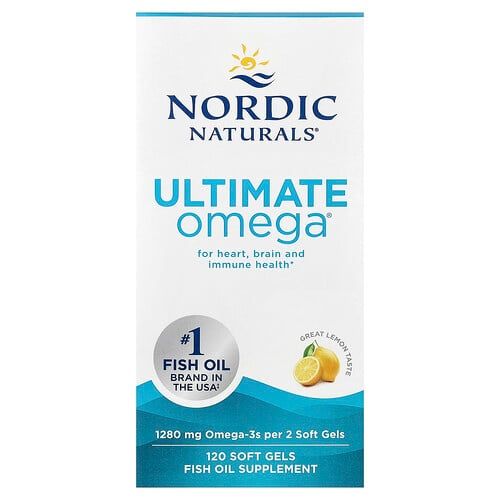 | 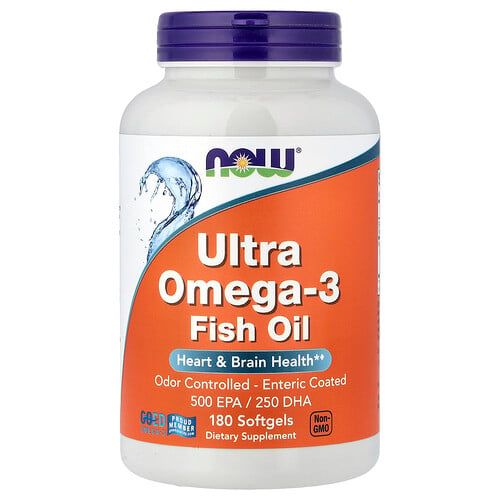 | 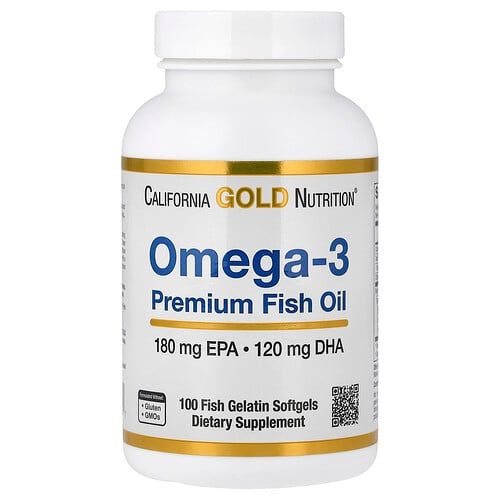 | 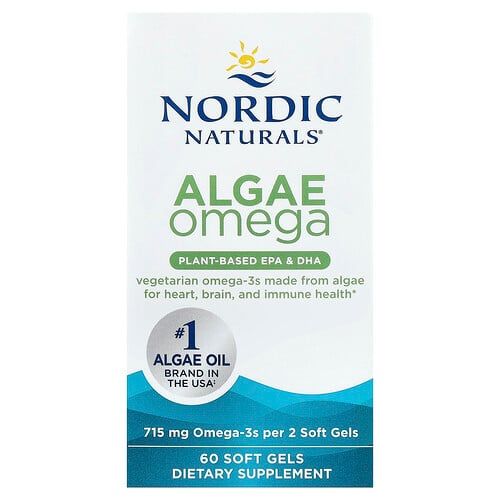 | |
|---|---|---|---|---|---|
| Serving size | 2 soft gels | 1 softgel | 2 softgels | 2 soft gels | 2 softgels |
| EPA + DHA per serving | 1,100 mg (EPA 650 mg, DHA 450 mg) | 750 mg (EPA 500 mg, DHA 250 mg) | 600 mg (EPA 360 mg, DHA 240 mg) | 585 mg (EPA 195 mg, DHA 390 mg) | 630 mg (EPA 210 mg, DHA 420 mg) |
| Oil source | Purified deep sea fish oil (anchovies, sardines) | Fish oil concentrate, 1,000 mg (anchovy, sardine) | Fish oil concentrate, 2,200 mg (anchovy, mackerel, sardine and/or tuna) | Algal oil (marine algae) | Algal oil concentrate (life’sOMEGA), 1,400 mg |
| Shell and additives | Gelatin, glycerin, water, natural lemon flavour, vitamin E, rosemary extract | Fish gelatin (basa, tilapia), glycerin, water, lemon oil, vitamin E | Fish gelatin (tilapia), glycerin, water, mixed tocopherols | Plant-based soft gel (modified corn starch, carrageenan, sorbitol, glycerin), high-oleic sunflower oil, antioxidants | Tapioca-starch softgel, glycerin, water, sunflower seed oil, antioxidants |
| Where to buy |
For a target like the 250 mg of EPA and DHA that appears in EU-authorised heart claims, any of these is more than enough in one serving. The difference matters more if you are aiming for higher amounts, where algal oil means more softgels.
Quality and freshness
Both oils are polyunsaturated fats that can oxidise (go rancid). Label claims don’t guarantee freshness or content: a 2015 study of 32 fish oil supplements sold in New Zealand found that most exceeded at least one recommended oxidation limit and most contained less EPA and DHA than their labels stated, although later surveys in New Zealand and the US found much better compliance. Our guide to comparing omega-3 supplements explains what independent testing can and can’t tell you.
Fish oil labels usually describe purification and contaminant testing. NOW, for example, states that its oil is molecularly distilled and tested for PCBs, dioxins, mercury and other heavy metals. Algal oils come from algae rather than fish, but a label statement is still the only assurance you get, so the same scepticism applies.
Which should you choose?
- You eat fish and want the most EPA + DHA per capsule: a concentrated fish oil fits best.
- You are vegan or vegetarian, or allergic to fish: algal oil in a plant-based softgel. Check the capsule as well as the oil.
- You mainly want DHA: the algal oils we compared are DHA-weighted, so they deliver DHA efficiently.
- You take a blood thinner, are pregnant, or have surgery planned: ask your doctor or pharmacist first, whichever source you choose.
We put all five products, with their full label details, side by side in Omega-3 Supplements on iHerb Compared. For the difference between the two omega-3s themselves, see EPA vs DHA.
Sources
The research and official guidance this article draws on.
- Omega-3 Supplements: What You Need To Know. National Center for Complementary and Integrative Health (NIH) (checked )
- Algal-oil capsules and cooked salmon: nutritionally equivalent sources of docosahexaenoic acid. Journal of the American Dietetic Association, 2008 (checked )
- Scientific Opinion on the Tolerable Upper Intake Level of eicosapentaenoic acid (EPA), docosahexaenoic acid (DHA) and docosapentaenoic acid (DPA). EFSA Journal, 2012 (checked )
- Fish oil supplements in New Zealand are highly oxidised and do not meet label content of n-3 PUFA. Scientific Reports, 2015 (checked )
- Omega-3 Long-Chain Polyunsaturated Fatty Acid Content and Oxidation State of Fish Oil Supplements in New Zealand. Scientific Reports, 2017 (checked )
- Ingredient label claim compliance and oxidative quality of EPA/DHA omega-3 retail products in the U.S.. Journal of Food Composition and Analysis, 2020 (checked )
- Nordic Naturals Algae Omega (label 288732); Sports Research Vegan Omega-3 (label 305211); NOW Ultra Omega-3 (label 314161); Nordic Naturals Ultimate Omega (label 288764); California Gold Nutrition Omega-3 Premium Fish Oil (label 274552). NIH Dietary Supplement Label Database (checked )
This article is general information, not medical advice. Whether a supplement suits you depends on your health, diet and any medication you take, which a doctor or pharmacist can help you weigh up. Read our medical disclaimer.
Who wrote this
Nourlume is an independent online publication about supplements, skincare and everyday wellness. Pieces credited to Nourlume rather than a named writer follow our editorial policy, which explains how we research, source and update our work.