Article
Omega-3 in Fish: How Much EPA and DHA Is in Salmon, Sardines, Tuna and More
EPA and DHA per portion of salmon, herring, sardines, mackerel, tuna, cod and shrimp, how much fish the NHS advises, and which fish to limit for mercury.
In this article (4)
Before comparing omega-3 supplements, it’s worth knowing how much EPA and DHA ordinary fish provides. A single portion of oily fish can contain as much as several fish oil capsules. This guide puts numbers on common fish, sets out how much fish health authorities advise eating, and explains which fish to limit.
EPA and DHA in a portion of fish
The NHS counts a portion of fish as about 140 g, cooked. Using the US Department of Agriculture’s FoodData Central figures, this is how much EPA and DHA that portion contains:
| Fish (cooked unless stated) | EPA + DHA per 140 g | EPA | DHA | Per 100 g |
|---|---|---|---|---|
| Salmon, Atlantic, farmed | 3.0 g | 0.97 g | 2.04 g | 2.15 g |
| Herring, Atlantic | 2.8 g | 1.27 g | 1.54 g | 2.01 g |
| Salmon, Atlantic, wild | 2.6 g | 0.58 g | 2.00 g | 1.84 g |
| Sardines, Pacific, canned in tomato sauce, drained | 2.0 g | 0.74 g | 1.21 g | 1.40 g |
| Mackerel, Atlantic | 1.7 g | 0.71 g | 0.98 g | 1.20 g |
| Sardines, Atlantic, canned in oil, drained | 1.4 g | 0.66 g | 0.71 g | 0.98 g |
| Trout, rainbow, farmed | 1.2 g | 0.36 g | 0.86 g | 0.88 g |
| Tuna, white (albacore), canned in water | 1.2 g | 0.33 g | 0.88 g | 0.86 g |
| Salmon, sockeye | 1.2 g | 0.42 g | 0.78 g | 0.86 g |
| Tuna, light, canned in water | 0.38 g | 0.07 g | 0.31 g | 0.27 g |
| Cod, Atlantic | 0.22 g | 0.01 g | 0.22 g | 0.16 g |
| Shrimp | 0.04 g | 0.02 g | 0.02 g | 0.03 g |
These are average values from laboratory analyses; real fish vary. Two patterns stand out:
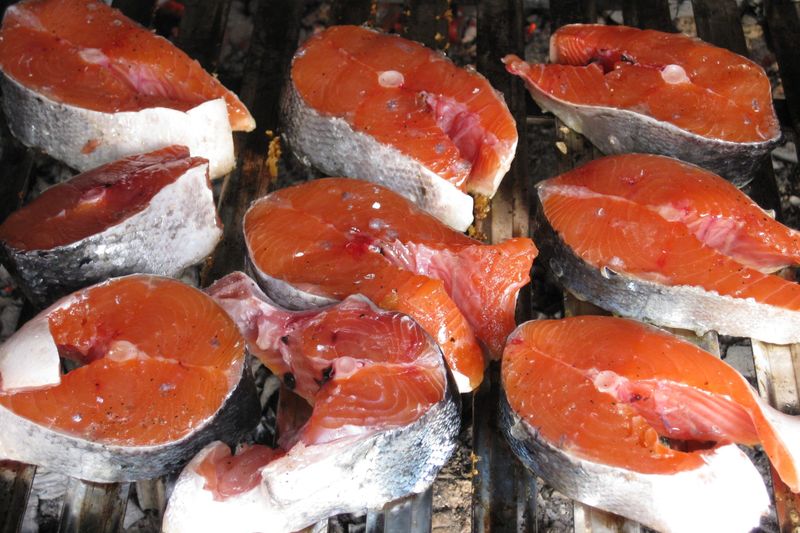
- Oily fish lead by a wide margin. Salmon, herring, sardines, mackerel and trout provide 1.2–3 g of EPA and DHA per portion; cod and shrimp provide a few hundred milligrams at most.
- “Salmon” and “tuna” cover very different numbers. In these data, a portion of farmed Atlantic salmon has about two and a half times the EPA and DHA of sockeye salmon, and canned albacore about three times as much as canned light tuna.
How much fish to eat
The NHS advises that a healthy, balanced diet should include at least two portions of fish a week, including one of oily fish. It lists herring, pilchards, salmon, sardines, sprats, trout and mackerel as oily fish. Fresh and canned tuna don’t count as oily fish.
To put the table in context: one 140 g portion of herring a week averages out to about 400 mg of EPA plus DHA a day. The EU’s authorised claim that EPA and DHA contribute to normal heart function applies at 250 mg a day.
Which fish to limit
Oily fish can contain more pollutants than other seafood, and some large fish contain more mercury. The NHS advice:
- Girls and women who haven’t been through the menopause, including those trying for a baby, pregnant or breastfeeding, should have no more than two portions of oily fish a week.
- Shark, swordfish and marlin: don’t eat them if you’re pregnant or trying to get pregnant. Other adults should have no more than one portion a week.
The US FDA and EPA sort fish into “Best Choices”, “Good Choices” and “Choices to Avoid” by mercury. Salmon, sardines, herring, Atlantic mackerel, trout, cod, shrimp and canned light tuna are all Best Choices. Canned albacore tuna is a Good Choice. King mackerel, marlin, orange roughy, shark, swordfish, Gulf of Mexico tilefish and bigeye tuna are Choices to Avoid. For pregnancy and breastfeeding, the FDA advises 8 to 12 ounces (about 225–340 g) a week of a variety of lower-mercury fish.
Advice differs between countries, and between adults and children. If you’re pregnant, feeding young children or have a medical condition, follow your own health service’s guidance.
Fish compared with supplements
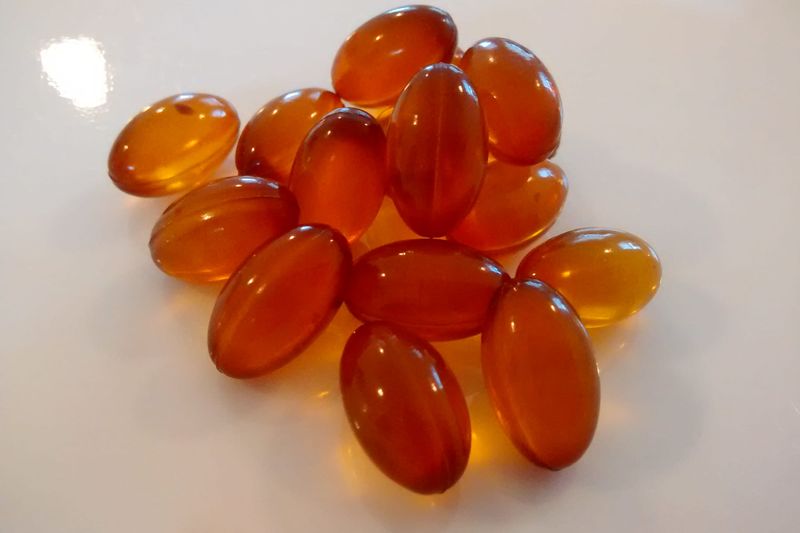
For scale: one NOW Ultra Omega-3 softgel, among the more concentrated fish oils we’ve compared, lists 750 mg of EPA and DHA. A portion of farmed salmon or herring provides about as much as four of those softgels. Fish also brings protein, vitamin D (the NHS calls oily fish a good source) and other nutrients that a capsule doesn’t.
Supplements are mainly a question for people who don’t eat fish regularly. If that’s you, our comparison of omega-3 supplements lists EPA and DHA per serving for each product, and algae oil vs fish oil covers vegan sources. EPA vs DHA explains the two fatty acids themselves.
Sources
The research and official guidance this article draws on.
- Fish and shellfish. NHS (checked )
- Advice about Eating Fish (advice revised October 2021). U.S. Food and Drug Administration and Environmental Protection Agency (checked )
- FoodData Central, SR Legacy: EPA (20:5 n-3) and DHA (22:6 n-3) for food IDs 175168, 175117, 171998, 175140, 175120, 175139, 173718, 175158, 173692, 171986, 171956, 175180. U.S. Department of Agriculture (checked )
- Commission Regulation (EU) No 432/2012 establishing a list of permitted health claims made on foods. EUR-Lex, European Union (checked )
- NOW Ultra Omega-3 Fish Oil (label 314161). NIH Dietary Supplement Label Database (checked )
This article is general information, not medical advice. Whether a supplement suits you depends on your health, diet and any medication you take, which a doctor or pharmacist can help you weigh up. Read our medical disclaimer.
Who wrote this
Nourlume is an independent online publication about supplements, skincare and everyday wellness. Pieces credited to Nourlume rather than a named writer follow our editorial policy, which explains how we research, source and update our work.