Article
Vitamin D Foods: How Much Is in Fish, Eggs, Mushrooms and Milk
Vitamin D per serving of fish, eggs, mushrooms, fortified milk and cod liver oil (USDA data), and why the NHS suggests a supplement in autumn and winter.
In this article (5)
Vitamin D is unusual among nutrients: for much of the year, most of it comes from sunlight on the skin rather than from food. That is exactly why food matters more in the darker months. This guide shows how much vitamin D common foods provide, and why health authorities still suggest a supplement for part of the year.
How much vitamin D you need
The NHS says children from the age of 1 year and adults need 10 mcg (400 IU) of vitamin D a day, including pregnant and breastfeeding women. From about late March or early April to the end of September, most people in the UK can make the vitamin D they need from sunlight. Between October and early March, they can’t.
Because it’s difficult to get enough vitamin D from food alone, the NHS advises that everyone should consider a daily 10 mcg supplement in autumn and winter, and all year round for people who get little sun on their skin, cover most of their skin outdoors or have dark skin. Advice in other countries differs, and the NHS has separate advice for babies and young children.
Vitamin D per serving
The NHS lists oily fish, red meat, egg yolks, liver and fortified foods as sources. These figures come from the US Department of Agriculture’s FoodData Central database:
| Food | Serving | Vitamin D | % of 10 mcg | Per 100 g |
|---|---|---|---|---|
| Trout, rainbow, farmed, cooked | 140 g | 26.6 mcg (1,064 IU) | 266% | 19 mcg |
| Salmon, sockeye, cooked | 140 g | 23.4 mcg (935 IU) | 234% | 16.7 mcg |
| Maitake mushrooms, raw | 1 cup, diced (70 g) | 19.7 mcg (787 IU) | 197% | 28.1 mcg |
| Salmon, pink, canned | 140 g | 19.2 mcg (767 IU) | 192% | 13.7 mcg |
| Salmon, Atlantic, farmed, cooked | 140 g | 18.3 mcg (734 IU) | 183% | 13.1 mcg |
| Mackerel, Pacific and jack, cooked | 140 g | 16.0 mcg (638 IU) | 160% | 11.4 mcg |
| Portabella mushrooms exposed to UV light, grilled | 1 cup, sliced (121 g) | 15.9 mcg (634 IU) | 159% | 13.1 mcg |
| Cod liver oil | 1 tsp (4.5 g) | 11.3 mcg (450 IU) | 113% | 250 mcg |
| Herring, Atlantic, cooked | 140 g | 7.6 mcg (302 IU) | 76% | 5.4 mcg |
| Sardines, Atlantic, canned in oil, drained | 1 can (92 g) | 4.4 mcg (177 IU) | 44% | 4.8 mcg |
| Milk, 2% fat, fortified (US) | 1 cup (244 g) | 2.9 mcg (117 IU) | 29% | 1.2 mcg |
| Soy milk, fortified | 1 cup (243 g) | 2.7 mcg (107 IU) | 27% | 1.1 mcg |
| Tuna, light, canned in water | 140 g | 1.7 mcg (67 IU) | 17% | 1.2 mcg |
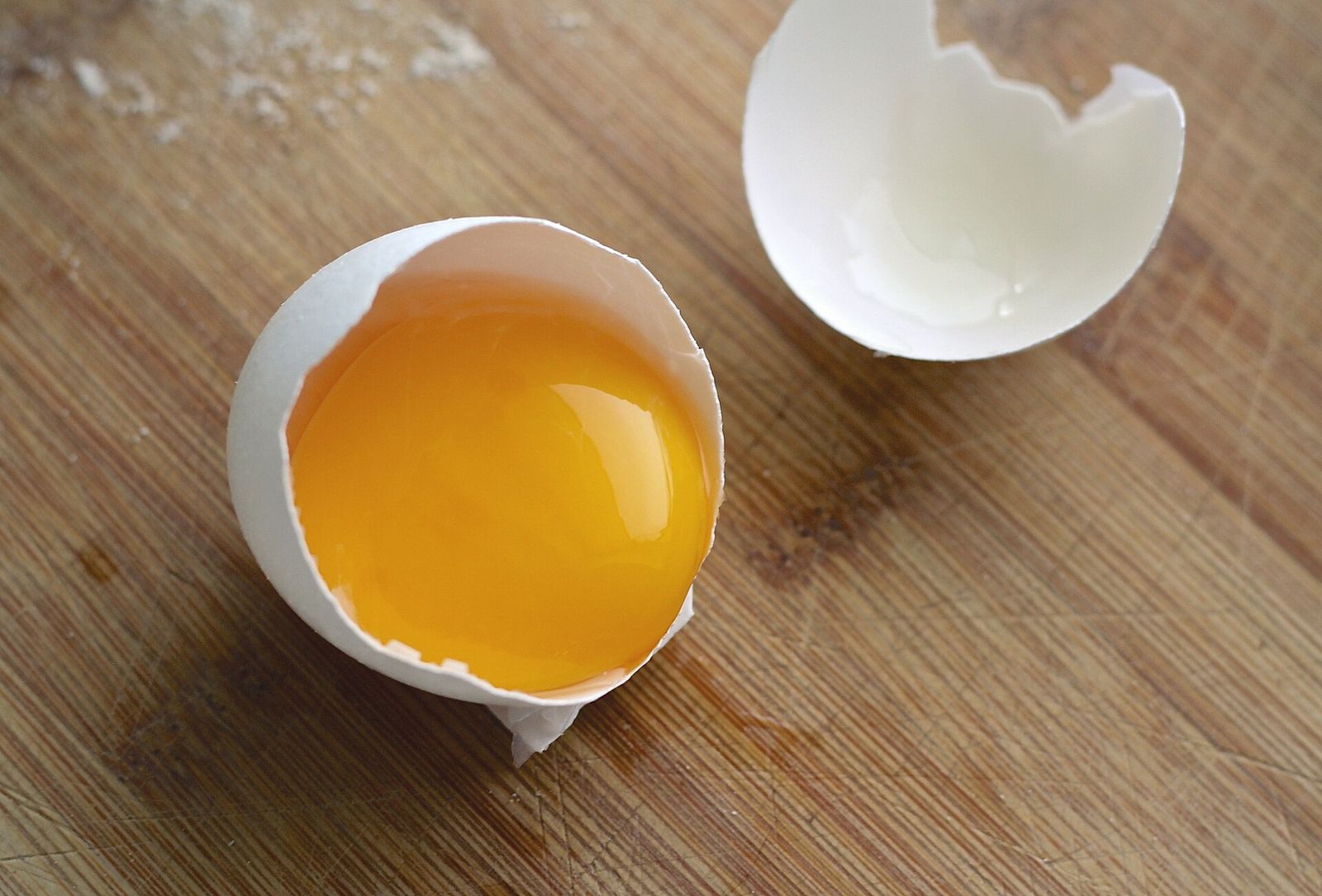
| Egg, whole, hard-boiled | 1 large (50 g) | 1.1 mcg (44 IU) | 11% | 2.2 mcg |
| Beef liver, pan-fried | 85 g | 1.0 mcg (41 IU) | 10% | 1.2 mcg |
| Shiitake mushrooms, dried | 4 mushrooms (15 g) | 0.6 mcg (23 IU) | 6% | 3.9 mcg |
| Cheddar cheese | 1 slice (28 g) | 0.3 mcg (11 IU) | 3% | 1 mcg |
| White mushrooms, raw | 1 cup (70 g) | 0.1 mcg (6 IU) | 1% | 0.2 mcg |
These are average values from laboratory analyses. Fish vary a lot, and fortified products depend on the brand and the country. For the units, see vitamin D IU to mcg.
What the list shows
- Oily fish is the only everyday food with large amounts. One portion of trout, salmon or mackerel provides more than a day’s 10 mcg. But eaten once a week, a portion of farmed salmon averages out to about 2.6 mcg a day, a quarter of the figure. That is why the NHS calls food alone difficult.
- Eggs, cheese, meat and liver provide small amounts. An egg gives about 1 mcg.
- Mushrooms depend on light. Ordinary white mushrooms contain almost none. Maitake and mushrooms exposed to UV light contain much more, and the vitamin D in mushrooms is D2, the form that raised blood levels less than D3 in comparison studies (see vitamin D2 vs D3).
- Milk is fortified in some countries, not others. The USDA figure is for US milk with added vitamin D. The NHS points out that cows’ milk in the UK is generally not fortified.
Cod liver oil and liver: watch the vitamin A
A teaspoon of cod liver oil provides about 11 mcg of vitamin D, but also about 1,350 mcg of vitamin A, according to USDA data. An 85 g portion of beef liver contains about 6,600 mcg of vitamin A.
The NHS says fish liver oil is high in vitamin A, and advises:
- Pregnancy: avoid liver and liver products, because their high levels of vitamin A can be harmful to the baby. If you’re pregnant, check with your midwife or doctor before taking cod liver oil.
- Women past the menopause and older men shouldn’t have more than 1.5 mg (1,500 mcg) of vitamin A a day from food and supplements, and shouldn’t take supplements containing vitamin A, including fish liver oil, if they eat liver every week.
If you take a supplement
The NHS says 10 mcg a day is enough for most people who choose to take one, and that adults shouldn’t take more than 100 mcg (4,000 IU) a day unless a doctor advises it. If you’re comparing products, we line up five vitamin D3 supplements by strength, oil and vegan suitability in vitamin D3 supplements compared.
Sources
The research and official guidance this article draws on.
- Vitamin D. NHS (checked )
- Vitamin A. NHS (checked )
- Foods to avoid in pregnancy. NHS (checked )
- FoodData Central, SR Legacy (April 2018 release): vitamin D (D2 + D3), D2, D3, vitamin A and portion weights for food IDs 173718, 173692, 169403, 173690, 175168, 171994, 169377, 173577, 175117, 175139, 171267, 172456, 173709, 173424, 168627, 168436, 170899, 169251. U.S. Department of Agriculture (checked )
This article is general information, not medical advice. Whether a supplement suits you depends on your health, diet and any medication you take, which a doctor or pharmacist can help you weigh up. Read our medical disclaimer.
Who wrote this
Nourlume is an independent online publication about supplements, skincare and everyday wellness. Pieces credited to Nourlume rather than a named writer follow our editorial policy, which explains how we research, source and update our work.