Article
Vitamin C Serums: L-Ascorbic Acid, Derivatives and What the Research Shows
What vitamin C serums contain, why pure L-ascorbic acid needs a low pH, how derivatives differ, what the clinical studies found, and how to read the label.
Affiliate links. Some links on this page are affiliate links: if you buy through them, Nourlume may earn a commission at no extra cost to you. Affiliate relationships do not determine our editorial conclusions. About affiliate links

In this article (7)
Vitamin C serums are everywhere in skincare, and they are hard to compare. Some contain pure vitamin C at a stated percentage, others a vitamin C “derivative”, and many combine it with a long list of other ingredients. The research behind vitamin C is real but narrower than the marketing, and most of it applies to one specific form.
Comparing products? Our comparison of four vitamin C serums sold on iHerb lines up their ingredient lists and stated strengths.
What “vitamin C” means on an ingredient list
| Name on the ingredient list | What it is | What the research shows |
|---|---|---|
| Ascorbic acid | Pure vitamin C (L-ascorbic acid) | The best-studied form; gets into skin only in acidic formulas |
| 3-O-ethyl ascorbic acid (ethyl ascorbic acid) | A derivative | Not covered by the studies cited here |
| Sodium ascorbyl phosphate, magnesium ascorbyl phosphate | Derivatives | Magnesium ascorbyl phosphate didn’t raise skin vitamin C in a 2001 study |
| Ascorbyl palmitate, ascorbyl glucoside, tetrahexyldecyl ascorbate | Derivatives | Ascorbyl palmitate didn’t raise skin vitamin C in the same study; the others aren’t covered by the studies cited here |
Derivatives are used largely because pure ascorbic acid is unstable and loses activity over time. A 2012 review of vitamin C and its derivatives describes this instability, together with the difficulty of getting vitamin C into the skin, as the central formulation problem.
Why pH and concentration matter
A widely cited study on how topical vitamin C gets into the skin was carried out on pig skin in 2001. The researchers found that:
- L-ascorbic acid entered the skin only when formulated at a pH below 3.5.
- Absorption rose with concentration up to 20%, and didn’t increase further above that.
- Skin levels were saturated after three daily applications, and vitamin C stayed in the skin with a half-life of about four days.
- Three derivatives (magnesium ascorbyl phosphate, ascorbyl palmitate and dehydroascorbic acid) did not increase vitamin C levels in the skin.
Two cautions: this was pig skin, not human skin, and raising skin vitamin C levels is a step towards an effect, not proof of one. Still, it shows why formulation matters, and why “contains vitamin C” on a derivative-based product doesn’t mean the same thing.
Product labels rarely state the pH, so you usually can’t check this from the box.
What clinical studies found
Sun-damaged skin. In a double-blind trial published in 2003, women with photoaged skin applied a 5% vitamin C cream to one side and the same cream without vitamin C to the other, daily for six months. Dermatologist assessment and the volunteers’ own ratings both favoured the vitamin C side, and skin replicas and biopsies showed changes consistent with the visible improvement. The cream was well tolerated.
Protection from UV damage. Laboratory and animal work, including a 1992 study in pigs, found that topical vitamin C reduced signs of UV damage. Some brands, COSRX among them, suggest using their vitamin C serum in the daytime followed by sunscreen. Vitamin C is not a substitute for sunscreen.
The overall picture. A 2017 review in The Journal of Clinical and Aesthetic Dermatology describes mechanisms for antioxidant, anti-ageing and anti-pigmentation effects, but concludes that clinical studies of topical vitamin C remain limited, and that the challenge is finding stable formulations that get into the skin.
Stability: the practical part
Because ascorbic acid oxidises, how a serum is packaged and kept matters as much as the percentage on the bottle.
- Check the period-after-opening. Some brands state it. COSRX, for example, gives its 23% serum two months after opening; Klairs suggests using its Freshly Juiced Vitamin Drop within six months of opening for the best effect.
- Buy a size you will finish. A 20 ml bottle used daily lasts weeks rather than months, which suits an ingredient that degrades once opened.
- Store it as directed, away from heat and light.
Irritation and how to start
Any active serum can irritate some skin. COSRX, for instance, advises against using its 23% serum at the same time as retinol or copper peptides. Introducing one product at a time makes it easier to tell what is causing a reaction. Some vitamin C serums also contain essential oils or fragrance, which some people prefer to avoid; the ingredient list will tell you. If you have a skin condition or a strong reaction, a dermatologist or pharmacist is the right person to ask.
How to read a vitamin C serum label
- Find the vitamin C ingredient and note which form it is.
- Check its position. Ingredients above 1% are listed in descending order, so ascorbic acid near the top usually means a meaningful amount. Our guide to reading a skincare ingredient list explains the rules and where they stop being useful.
- Look for a stated percentage. Some brands give it in the ingredient list or product name.
- Scan for fragrance and essential oils if you avoid them.
- Check the size and the period-after-opening.
Comparing real serums
We put four vitamin C serums sold on iHerb side by side, from a 5% beginner serum to a 23% ascorbic acid formula and a derivative-based ampoule, in Vitamin C Serums on iHerb Compared.
| Product | 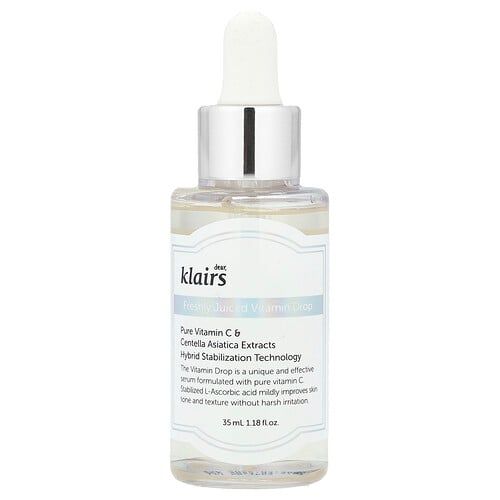 | 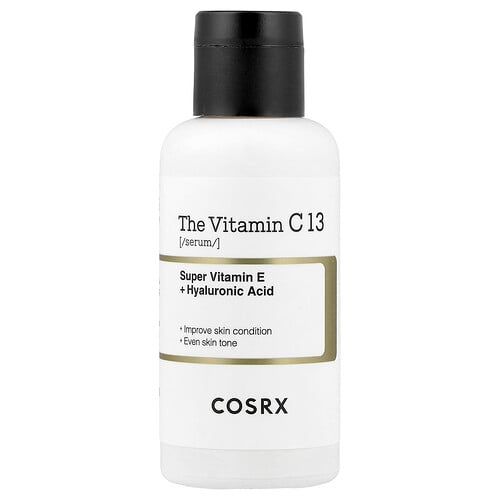 | 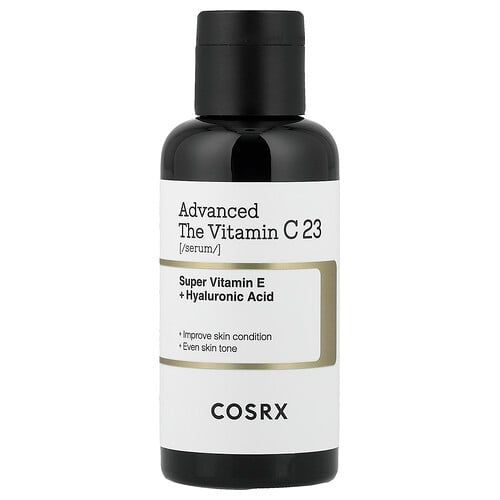 | 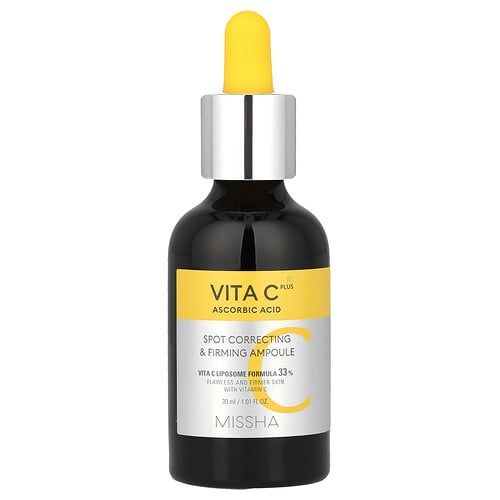 |
|---|---|---|---|---|
| Vitamin C form and strength | Ascorbic acid, 5% according to the brand; also sodium ascorbyl phosphate | Ascorbic acid, 13% (stated in the ingredient list); also 3-O-ethyl ascorbic acid | Ascorbic acid, 23% (stated in the ingredient list); also 3-O-ethyl ascorbic acid | Mainly a derivative (3-O-ethyl ascorbic acid); ascorbic acid and ascorbyl glucoside near the end of the list. Strength not stated |
| Fragrance or essential oils listed | Yes: orange and lavender oils, limonene | None listed | None listed | Yes: orange, grapefruit, eucalyptus and lavender oils |
| Where to buy |
Sources
The research and official guidance this article draws on.
- Topical L-ascorbic acid: percutaneous absorption studies. Dermatologic Surgery, 2001 (checked )
- Topical ascorbic acid on photoaged skin. Clinical, topographical and ultrastructural evaluation: double-blind study vs. placebo. Experimental Dermatology, 2003 (checked )
- Topical Vitamin C and the Skin: Mechanisms of Action and Clinical Applications. The Journal of Clinical and Aesthetic Dermatology, 2017 (checked )
- Stability, transdermal penetration, and cutaneous effects of ascorbic acid and its derivatives. Journal of Cosmetic Dermatology, 2012 (checked )
- Topical vitamin C protects porcine skin from ultraviolet radiation-induced damage. British Journal of Dermatology, 1992 (checked )
- Cosmetics Labeling Guide. U.S. Food and Drug Administration (checked )
This article is general information, not medical advice. Skin can react differently to the same product. For questions about a skin condition, a reaction to a product or a prescribed treatment, talk to a dermatologist, doctor or pharmacist. Read our medical disclaimer.
Who wrote this
Nourlume is an independent online publication about supplements, skincare and everyday wellness. Pieces credited to Nourlume rather than a named writer follow our editorial policy, which explains how we research, source and update our work.