Buying guide
Vitamin C Serums on iHerb: Four Ingredient Lists Compared
Four vitamin C serums sold on iHerb compared by their ingredient lists: vitamin C form and strength, other actives, fragrance and pack size. No ratings.
Affiliate links. Some links on this page are affiliate links: if you buy through them, Nourlume may earn a commission at no extra cost to you. Affiliate relationships do not determine our editorial conclusions. About affiliate links
Choose by situation
From the 4 labels compared below · no ratings, no “best”
Shown for the country your connection appears to come from (we don’t store it). iHerb sets the terms, so check that the discount applies at checkout. Affiliate link.
Highest stated strength
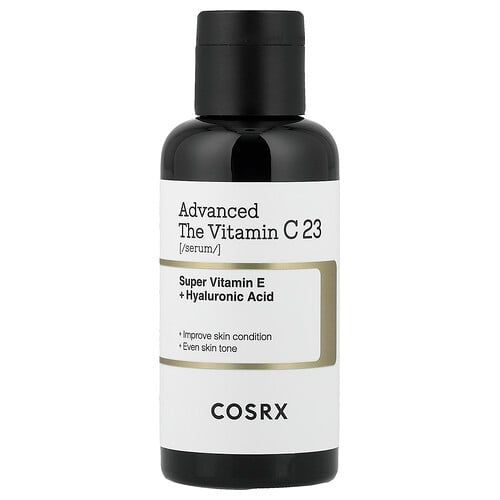
COSRX Advanced The Vitamin C 23 Serum
Ascorbic acid 23%
The highest of the 3 labels here that state it.
Fragrance-free
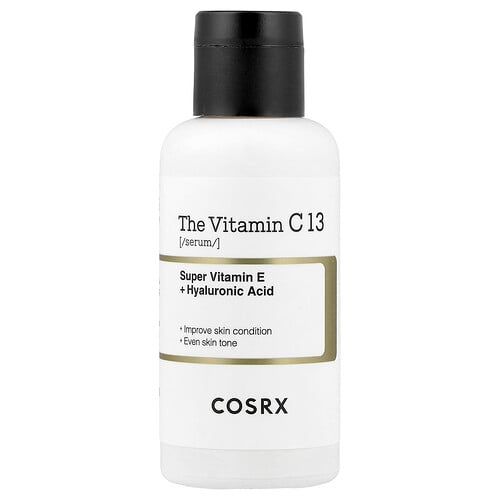
COSRX The Vitamin C 13 Serum
Ascorbic acid 13%
No fragrance or essential oils in the ingredient list.
Lowest stated strength
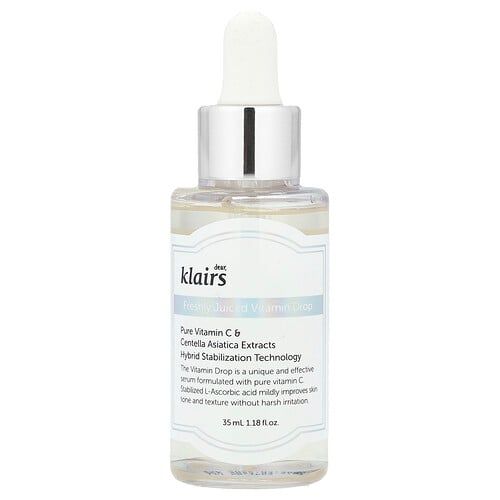
Dear, Klairs Freshly Juiced Vitamin Drop
Ascorbic acid 5%
The lowest of the 3 labels here that state it; it contains fragrance (essential oils).
Derivative instead of pure vitamin C
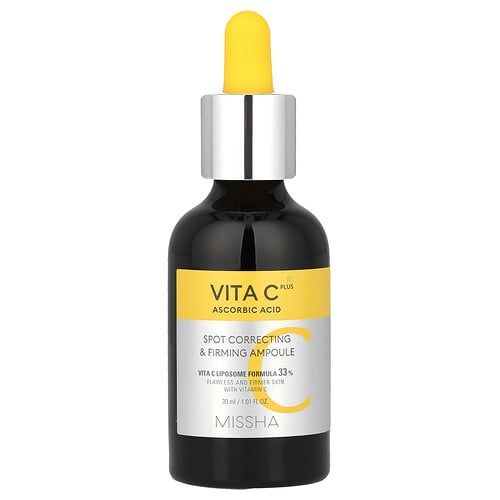
Missha Vita C Plus Spot Correcting & Firming Ampoule
Mainly a vitamin C derivative; strength not stated
Mainly 3-O-ethyl ascorbic acid, with pure ascorbic acid near the end of the list; contains essential oils.
Each pick follows a fixed rule applied to the label facts (labels checked October 17, 2026); nothing here is paid for. Retailer buttons are affiliate links. Strengths and limitations of each product are further down.
How each pick is chosen
- Highest stated strength: The highest ascorbic acid percentage stated by the brand, shown only when one product clearly leads.
- Fragrance-free: No fragrance or essential oils in the ingredient list; if several, the one with the higher stated strength.
- Lowest stated strength: The lowest ascorbic acid percentage stated by the brand, shown only when one product clearly has the lowest.
- Derivative instead of pure vitamin C: Built mainly on a vitamin C derivative rather than pure ascorbic acid, according to the ingredient list.
In this article (5)
Vitamin C serums are sold on their percentages, but the number on the front is only part of the story. This guide compares four serums sold on iHerb using the ingredient lists the brands publish on their own websites: what form of vitamin C each uses, at what strength, what else is in the bottle, and whether it contains fragrance.
We haven’t tested these serums on skin, and we don’t rate them. The four were chosen to show the range you’ll find, not as a list of winners.
How we chose these four
- Each is sold on iHerb (we found every product page in iHerb’s own product catalogue in October 2026).
- Each brand publishes a full ingredient list on its official website, which is where every fact below comes from.
- Together they cover the main options: a low-strength L-ascorbic acid serum, two higher-strength L-ascorbic acid serums, and a serum built mainly on a vitamin C derivative.
Brands sometimes sell different versions of a product in different countries. Check the ingredient list on the listing or the pack you receive.
The ingredient lists side by side
| Product | | | | |
|---|---|---|---|---|
| Vitamin C form and strength | Ascorbic acid, 5% according to the brand; also sodium ascorbyl phosphate | Ascorbic acid, 13% (stated in the ingredient list); also 3-O-ethyl ascorbic acid | Ascorbic acid, 23% (stated in the ingredient list); also 3-O-ethyl ascorbic acid | Mainly a derivative (3-O-ethyl ascorbic acid); ascorbic acid and ascorbyl glucoside near the end of the list. Strength not stated |
| First five ingredients | Water, propylene glycol, ascorbic acid, hydroxyethylcellulose, Citrus junos fruit extract | Water, ascorbic acid (13%), butylene glycol, dipropylene glycol, tromethamine | Water, ascorbic acid (23%), butylene glycol, dimethicone, panthenol | Water, sea buckthorn water, glycerin, licorice root extract, methylpropanediol |
| Other notable ingredients | Centella asiatica extract, many plant extracts, sodium hyaluronate, peptides | Niacinamide, glutathione, vitamin E (tocopherol, tocotrienols), sodium hyaluronate, panthenol | Niacinamide, glutathione, tocopherol and tocotrienols (vitamin E), sodium hyaluronate, caffeine | Niacinamide, tranexamic acid, arbutin, peptides, ceramide NP, hyaluronic acid |
| Fragrance or essential oils listed | Yes: orange and lavender oils, limonene | None listed | None listed | Yes: orange, grapefruit, eucalyptus and lavender oils |
| Where to buy |
What the comparison shows
Strength ranges from 5% to 23%. Klairs says its serum contains 5% vitamin C; COSRX states 13% and 23% directly in its ingredient lists. Missha doesn’t state a strength, and its main vitamin C ingredient is a derivative (3-O-ethyl ascorbic acid), with ascorbic acid itself near the end of the list.
More isn’t automatically better. In a widely cited study of how vitamin C gets into skin (on pig skin, in 2001), absorption of L-ascorbic acid increased with concentration up to 20% and not beyond. The main clinical trial we found used 5% in a cream. Our explainer on vitamin C serums goes through the research.
Supporting ingredients differ a lot. The two COSRX serums pair vitamin C with niacinamide, glutathione and vitamin E. Klairs lists many plant extracts and peptides. Missha combines vitamin C derivatives with niacinamide, tranexamic acid and arbutin, ingredients often marketed for dark spots. Multi-active formulas make it harder to tell what is doing what, or what caused a reaction.
Fragrance. The two COSRX serums list no fragrance or essential oils. Klairs contains orange and lavender oils (the brand confirms it isn’t fragrance-free), and Missha contains orange, grapefruit, eucalyptus and lavender oils.
Shelf life after opening. COSRX gives its 23% serum two months after opening. Klairs suggests using its serum within six months of opening for the best vitamin C effect. The two COSRX bottles are small (20 g and 20 ml), which suits a product that should be used up quickly.
The serums
A gentler-strength vitamin C serum with a long list of plant extracts and essential oils.
- Vitamin C form and strength
- Ascorbic acid, 5% according to the brand; also sodium ascorbyl phosphate
- First five ingredients
- Water, propylene glycol, ascorbic acid, hydroxyethylcellulose, Citrus junos fruit extract
- Other notable ingredients
- Centella asiatica extract, many plant extracts, sodium hyaluronate, peptides
- Fragrance or essential oils listed
- Yes: orange and lavender oils, limonene
Key facts
- A low-strength (5%) L-ascorbic acid serum that the brand positions for beginners and sensitive skin.
- Larger 35 ml bottle than the other serums we compared.
Worth weighing up
- Not fragrance-free: it contains citrus and lavender essential oils, as the brand confirms.
- The brand suggests using it within 6 months of opening for the best vitamin C effect.
The lower-strength sibling of the 23% serum, with a similar supporting cast of ingredients.
- Vitamin C form and strength
- Ascorbic acid, 13% (stated in the ingredient list); also 3-O-ethyl ascorbic acid
- First five ingredients
- Water, ascorbic acid (13%), butylene glycol, dipropylene glycol, tromethamine
- Other notable ingredients
- Niacinamide, glutathione, vitamin E (tocopherol, tocotrienols), sodium hyaluronate, panthenol
- Fragrance or essential oils listed
- None listed
Key facts
- A mid-strength L-ascorbic acid serum: 13%, as stated in the ingredient list.
- Contains niacinamide and glutathione alongside the vitamin C.
Worth weighing up
- Still a fairly high concentration for a first vitamin C product; sensitive skin may react.
- Small 20 ml bottle.
A high-strength L-ascorbic acid serum in a small 20 g pack, aimed at people already used to vitamin C.
- Vitamin C form and strength
- Ascorbic acid, 23% (stated in the ingredient list); also 3-O-ethyl ascorbic acid
- First five ingredients
- Water, ascorbic acid (23%), butylene glycol, dimethicone, panthenol
- Other notable ingredients
- Niacinamide, glutathione, tocopherol and tocotrienols (vitamin E), sodium hyaluronate, caffeine
- Fragrance or essential oils listed
- None listed
Key facts
- The highest stated L-ascorbic acid concentration among the serums we compared.
- Contains plant oils (palm, sunflower, safflower, camellia), so the texture is part oil.
Worth weighing up
- High-strength ascorbic acid can sting, especially on sensitive skin. The brand advises against using it at the same time as copper peptides or retinol.
- The brand states a shelf life of 2 months after opening.
A multi-ingredient “brightening” ampoule in which vitamin C is one of several actives, mostly in derivative form.
- Vitamin C form and strength
- Mainly a derivative (3-O-ethyl ascorbic acid); ascorbic acid and ascorbyl glucoside near the end of the list. Strength not stated
- First five ingredients
- Water, sea buckthorn water, glycerin, licorice root extract, methylpropanediol
- Other notable ingredients
- Niacinamide, tranexamic acid, arbutin, peptides, ceramide NP, hyaluronic acid
- Fragrance or essential oils listed
- Yes: orange, grapefruit, eucalyptus and lavender oils
Key facts
- Built around a vitamin C derivative rather than pure L-ascorbic acid.
- Also contains niacinamide, tranexamic acid and arbutin, which are often used in products aimed at dark spots.
Worth weighing up
- The vitamin C concentration isn’t stated, and pure ascorbic acid appears only near the end of the list.
- Contains several essential oils.
Which might suit you
These are editorial suggestions based on the ingredient lists, not a substitute for knowing your own skin:
- New to vitamin C, or sensitive skin: a lower-strength serum is a gentler place to start. Note that Klairs contains essential oils; for people concerned about fragrance sensitivities, the FDA suggests considering fragrance-free products.
- You want a stated, higher percentage and no fragrance: the COSRX serums are the clearest about what they contain.
- You want vitamin C as part of a multi-ingredient “brightening” product: Missha’s ampoule fits that description, but don’t expect it to behave like a high-strength L-ascorbic acid serum.
Whatever you choose, introduce one new product at a time and use sunscreen during the day. If you have a skin condition or react badly to a product, ask a dermatologist or pharmacist.
Sources
The research and official guidance this article draws on.
- COSRX: Advanced The Vitamin C 23 Serum (official product page, ingredient list). COSRX (checked )
- COSRX: The Vitamin C 13 Serum (official product page, ingredient list). COSRX (checked )
- Dear, Klairs: Freshly Juiced Vitamin Drop (official product page, ingredient list and FAQ). Dear, Klairs (checked )
- Missha US: Vita C Plus Spot Correcting & Firming Ampoule (official product page, ingredient list). Missha (checked )
- Fragrances in Cosmetics. U.S. Food and Drug Administration (checked )
- Topical L-ascorbic acid: percutaneous absorption studies. Dermatologic Surgery, 2001 (checked )
- Topical ascorbic acid on photoaged skin. Clinical, topographical and ultrastructural evaluation: double-blind study vs. placebo. Experimental Dermatology, 2003 (checked )
This article is general information, not medical advice. Skin can react differently to the same product. For questions about a skin condition, a reaction to a product or a prescribed treatment, talk to a dermatologist, doctor or pharmacist. Read our medical disclaimer.
Who wrote this
Nourlume is an independent online publication about supplements, skincare and everyday wellness. Pieces credited to Nourlume rather than a named writer follow our editorial policy, which explains how we research, source and update our work.