Article
How to Read a Skincare Ingredient List
What the order of a skincare ingredient list tells you, where the 1% line hides, why “fragrance” can mean many things, and what a list can’t reveal.
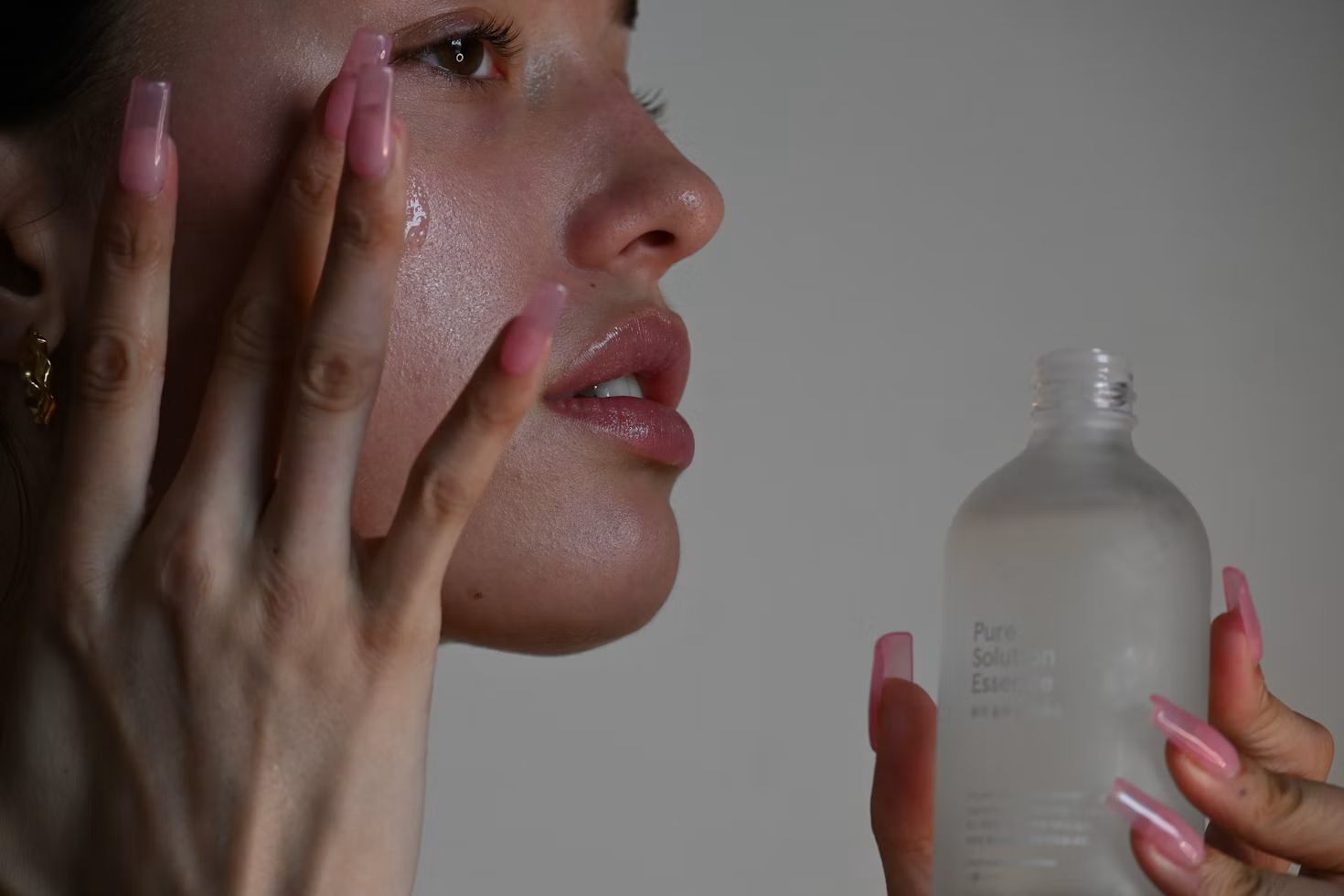
The front of a skincare product is written to sell it. The ingredient list on the back follows rules, which makes it one of the more reliable things on the packaging, as long as you know what those rules do and don’t require.
This guide uses the US rules set by the FDA. Other countries have their own regulations, and the details can differ.
Highest concentration first, but only down to 1%
Ingredients are listed in descending order of predominance: whatever is present in the largest amount comes first. That’s why so many lists start with water.
There is a catch. Ingredients present at 1% or less may be listed in any order after the ones above 1%, and colour additives can go at the very end, also in any order. Nothing on the pack marks where that 1% line falls.
So a list is only ranked at the top. Once you’re past the 1% point, an ingredient’s position no longer tells you whether there is more or less of it than its neighbours. An ingredient pictured on the front of the box can sit in that unranked tail.
Standard names, not marketing names
Ingredient names come from a fixed order of sources: names established by the FDA first, then a standard industry dictionary of cosmetic ingredients, then several pharmaceutical and food references. In practice, this means the same ingredient will usually appear under the same name on different brands’ ingredient lists, however the front of the pack describes it. Niacinamide, a form of vitamin B3, appears on ingredient lists as ‘Niacinamide’, even if the front of the pack says ‘vitamin B3’. We look at what the research says about it in Niacinamide in Skincare: What the Evidence Says.
“Fragrance” can stand for many ingredients
Under US rules, fragrance and flavour ingredients can be declared simply as “Fragrance” and “Flavor”. The FDA explains that fragrance formulas are complex mixtures of many natural and synthetic ingredients, and that they are the kind of cosmetic component most likely to be a trade secret.
The FDA also points out that it doesn’t have the same legal authority to require allergen labelling for cosmetics as it has for food. Its own suggestion for people concerned about fragrance sensitivities is to consider fragrance-free products.
When the box says “Drug Facts”
Some products are legally both a cosmetic and a drug, because of what they are intended to do. The FDA’s examples include anti-dandruff shampoos, deodorants that are also antiperspirants, and moisturisers or make-up sold with sun-protection claims.
These products carry two lists. Under FDA labelling rules for products that are both drugs and cosmetics, the drug ingredients are listed alphabetically as “Active Ingredients”, followed by the cosmetic ingredients in descending order of predominance as “Inactive Ingredients”.
Reading a list: an example
Here is a made-up list for a serum sold as a “vitamin C brightening serum”:
Water, Glycerin, Propanediol, Niacinamide, Sodium Hyaluronate, Ascorbyl Glucoside, Phenoxyethanol, Fragrance, Citric Acid
What the rules let you conclude:
| What you see | What it tells you | What it doesn’t |
|---|---|---|
| Water first | Water is the largest single ingredient | How much of the product it makes up |
| Ascorbyl Glucoside, a vitamin C derivative, sixth | If it is above 1%, there is less of it than of each ingredient listed before it. If it is at 1% or less, its position tells you nothing | Which of those two cases applies, or its actual concentration |
| Fragrance | A fragrance mixture is present | Which ingredients make up that mixture |
| No percentage anywhere | Nothing | Concentrations, which the list isn’t required to show |
The product is sold on vitamin C, but the list shows several ingredients above it. That doesn’t mean the serum is poor. It means the front of the pack and the list are answering different questions.
What an ingredient list can’t tell you
- Amounts. Apart from a rough ranking at the top, the list doesn’t show how much of anything is present.
- How the formula behaves as a whole. Texture, stability and how well ingredients work together depend on the full formulation and the packaging.
- Whether it suits your skin. The same ingredient can feel different in different products and on different people.
If you know you react to a particular cosmetic ingredient, the list is where you would look for it. A dermatologist can help work out which ingredients matter in your case.
Sources
The research and official guidance this article draws on.
- Cosmetics Labeling Guide. U.S. Food and Drug Administration (checked )
- Is It a Cosmetic, a Drug, or Both? (Or Is It Soap?). U.S. Food and Drug Administration (checked )
- Fragrances in Cosmetics. U.S. Food and Drug Administration (checked )
This article is general information, not medical advice. Skin can react differently to the same product. For questions about a skin condition, a reaction to a product or a prescribed treatment, talk to a dermatologist, doctor or pharmacist.
Who wrote this
Nourlume is an independent online publication about supplements, skincare and everyday wellness. Pieces credited to Nourlume rather than a named writer follow our editorial policy, which explains how we research, source and update our work.