Buying guide
Niacinamide Serums on iHerb: Three Ingredient Lists Compared
Three niacinamide serums sold on iHerb, compared by their ingredient lists: stated strength, other actives and fragrance, against the strengths used in studies.
Affiliate links. Some links on this page are affiliate links: if you buy through them, Nourlume may earn a commission at no extra cost to you. Affiliate relationships do not determine our editorial conclusions. About affiliate links
Choose by situation
From the 3 labels compared below · no ratings, no “best”
Shown for the country your connection appears to come from (we don’t store it). iHerb sets the terms, so check that the discount applies at checkout. Affiliate link.
Niacinamide on its own
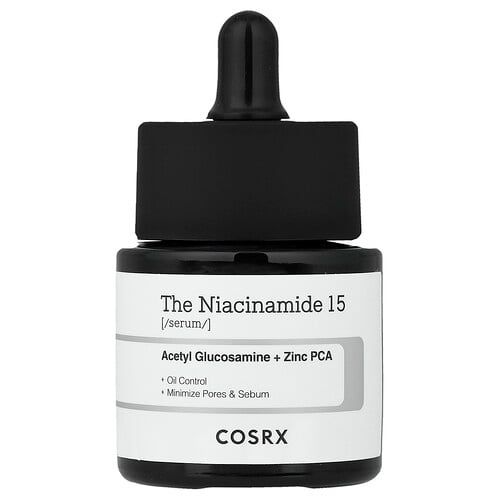
COSRX The Niacinamide 15 Serum
Niacinamide: 15% (stated in the ingredient list)
Niacinamide is the only key active, and its strength is stated in the ingredient list.
With tranexamic acid
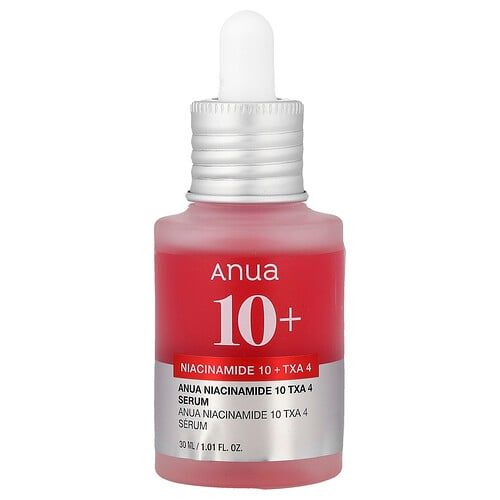
Anua Niacinamide 10 TXA 4 Serum
Niacinamide: 10% according to the product name; third ingredient
Also lists tranexamic acid and arbutin.
Propolis-led
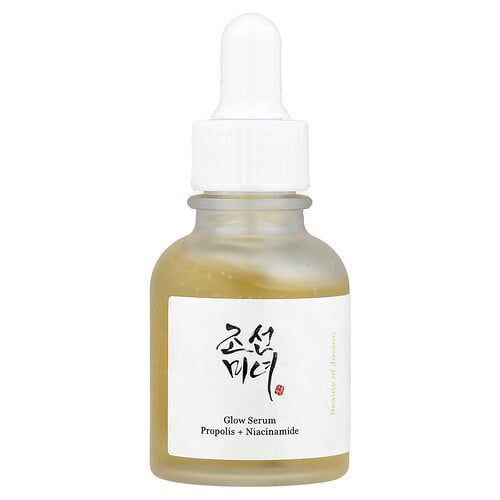
Beauty of Joseon Glow Serum: Propolis + Niacinamide
Niacinamide: Concentration not stated; sixth ingredient
Propolis extract comes before niacinamide in the list. It’s a bee product, so the serum isn’t vegan.
Each pick follows a fixed rule applied to the label facts (labels checked October 17, 2026); nothing here is paid for. Retailer buttons are affiliate links. Strengths and limitations of each product are further down.
How each pick is chosen
- Niacinamide on its own: Niacinamide is the only key active in the ingredient list.
- With tranexamic acid: Lists tranexamic acid alongside niacinamide.
- Propolis-led: Propolis extract listed among the key ingredients.

In this article (5)
Niacinamide serums are often sold on big percentages, such as 10% or 15%. The studies most often cited for niacinamide, though, used 2% and 5%, as we explain in Niacinamide in Skincare: What the Evidence Says. That makes the percentage on the bottle a poor guide on its own.
This guide compares three niacinamide serums sold on iHerb by the ingredient lists their brands publish. We haven’t tested them on skin, and we don’t rank them.
How we chose these three
- Sold on iHerb (each product page found in iHerb’s product catalogue in October 2026).
- A full ingredient list published on the brand’s official website.
- Three different approaches: a high-strength, short-list serum; a multi-active “dark spot” serum; and a serum in which niacinamide supports another headline ingredient.
The ingredient lists side by side
| Product | | | |
|---|---|---|---|
| Niacinamide | 15% (stated in the ingredient list) | 10% according to the product name; third ingredient | Concentration not stated; sixth ingredient |
| First five ingredients | Water, pentylene glycol, niacinamide (15%), butylene glycol, acetyl glucosamine | Water, glycerin, niacinamide, tranexamic acid, butylene glycol | Water, dipropylene glycol, glycerin, butylene glycol, propolis extract |
| Other notable ingredients | Zinc PCA, N-acetylglucosamine, allantoin | Tranexamic acid (4% per the name), arbutin and alpha-arbutin, several forms of hyaluronic acid, ceramide NP, betaine salicylate | Betaine salicylate (a BHA-related ingredient), tea tree extract, Centella asiatica extract, sodium hyaluronate |
| Fragrance or essential oils listed | None listed | None listed | None listed |
| Where to buy |
What the comparison shows
Stated strengths are above the studied ones. COSRX states 15% in its ingredient list and Anua 10% in the product name. Beauty of Joseon doesn’t give a figure; niacinamide is sixth on its list, after propolis extract. The studies frequently cited for niacinamide tested 2% and 5% formulations. They don’t show that more is better, and their results apply to the formulas tested, not automatically to other products.
What comes with the niacinamide.
- COSRX keeps it simple: 15 ingredients, with zinc PCA and N-acetylglucosamine alongside niacinamide.
- Anua combines niacinamide with tranexamic acid (4% according to the name), arbutin and alpha-arbutin, and lists about 50 ingredients, including several plant oils and forms of hyaluronic acid.
- Beauty of Joseon leads with propolis extract and adds betaine salicylate, which the brand describes as gently exfoliating.
Fragrance. None of the three lists fragrance or essential oils in the brand’s published ingredient list.
Suitability notes from the ingredient lists. Beauty of Joseon’s propolis is a bee product, so it isn’t vegan and isn’t for people allergic to bee products. Anua’s long list makes it harder to pin down the cause if your skin reacts.
The serums
A simple, high-concentration niacinamide serum with zinc PCA.
- Niacinamide
- 15% (stated in the ingredient list)
- First five ingredients
- Water, pentylene glycol, niacinamide (15%), butylene glycol, acetyl glucosamine
- Other notable ingredients
- Zinc PCA, N-acetylglucosamine, allantoin
- Fragrance or essential oils listed
- None listed
Key facts
- A short ingredient list of 15 items.
- States its niacinamide concentration: 15%.
Worth weighing up
- 15% is well above the 2–5% concentrations used in the frequently cited niacinamide studies.
- Small 20 ml bottle.
A multi-active “dark spot” serum built around 10% niacinamide and tranexamic acid.
- Niacinamide
- 10% according to the product name; third ingredient
- First five ingredients
- Water, glycerin, niacinamide, tranexamic acid, butylene glycol
- Other notable ingredients
- Tranexamic acid (4% per the name), arbutin and alpha-arbutin, several forms of hyaluronic acid, ceramide NP, betaine salicylate
- Fragrance or essential oils listed
- None listed
Key facts
- Combines niacinamide with tranexamic acid and arbutin, ingredients often used in products aimed at dark spots.
- Long ingredient list (about 50 items), including several plant oils.
Worth weighing up
- Many actives at once makes it hard to tell which one is responsible if your skin reacts.
- Concentrations come from the product name; the brand’s ingredient list doesn’t show percentages.
A propolis-led serum in which niacinamide is a supporting ingredient rather than the headline percentage.
- Niacinamide
- Concentration not stated; sixth ingredient
- First five ingredients
- Water, dipropylene glycol, glycerin, butylene glycol, propolis extract
- Other notable ingredients
- Betaine salicylate (a BHA-related ingredient), tea tree extract, Centella asiatica extract, sodium hyaluronate
- Fragrance or essential oils listed
- None listed
Key facts
- Propolis extract appears before niacinamide in the ingredient list.
- Contains betaine salicylate, which the brand describes as gently exfoliating.
Worth weighing up
- Propolis is a bee product, so the serum isn’t vegan, and people allergic to bee products should avoid it.
- Niacinamide concentration isn’t stated.
How to read a niacinamide label
- Look for “Niacinamide” on the ingredient list; that is its standard name, even if the front says “vitamin B3”.
- Check its position and any stated percentage. Ingredients above 1% are listed in descending order, so a high position suggests a substantial amount. Our guide to reading a skincare ingredient list explains where that rule stops being useful.
- Note the other actives, especially if you already use acids, retinoids or vitamin C.
- Check for fragrance if you avoid it.
If you have a skin condition, or a product causes redness or irritation, stop using it and ask a dermatologist or pharmacist.
Sources
The research and official guidance this article draws on.
- COSRX: The Niacinamide 15 Serum (official product page, ingredient list). COSRX (checked )
- Anua: Niacinamide 10 TXA 4 Serum (official product page, ingredient list). Anua (checked )
- Beauty of Joseon: Glow Serum Propolis + Niacinamide (official product page, ingredient list). Beauty of Joseon (checked )
- Niacinamide: A B vitamin that improves aging facial skin appearance. Dermatologic Surgery, 2005 (checked )
- The effect of niacinamide on reducing cutaneous pigmentation and suppression of melanosome transfer. British Journal of Dermatology, 2002 (checked )
- Cosmetics Labeling Guide. U.S. Food and Drug Administration (checked )
This article is general information, not medical advice. Skin can react differently to the same product. For questions about a skin condition, a reaction to a product or a prescribed treatment, talk to a dermatologist, doctor or pharmacist. Read our medical disclaimer.
Who wrote this
Nourlume is an independent online publication about supplements, skincare and everyday wellness. Pieces credited to Nourlume rather than a named writer follow our editorial policy, which explains how we research, source and update our work.