Buying guide
Collagen Supplements on iHerb: Six Labels Compared
Six collagen supplements sold on iHerb compared on their labels: grams per serving, fish or bovine source, added vitamin C, and what the research shows.
Affiliate links. Some links on this page are affiliate links: if you buy through them, Nourlume may earn a commission at no extra cost to you. Affiliate relationships do not determine our editorial conclusions. About affiliate links
Choose by situation
From the 6 labels compared below · no ratings, no “best”
Shown for the country your connection appears to come from (we don’t store it). iHerb sets the terms, so check that the discount applies at checkout. Affiliate link.
Most collagen per serving
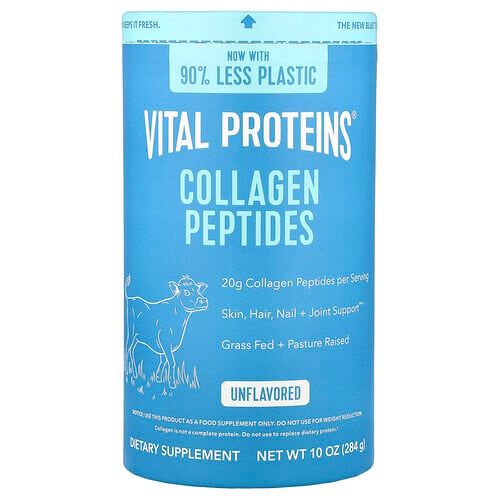
Vital Proteins Collagen Peptides, Unflavored
20 g collagen per serving
The most of the 6 labels compared here.
Plain marine collagen
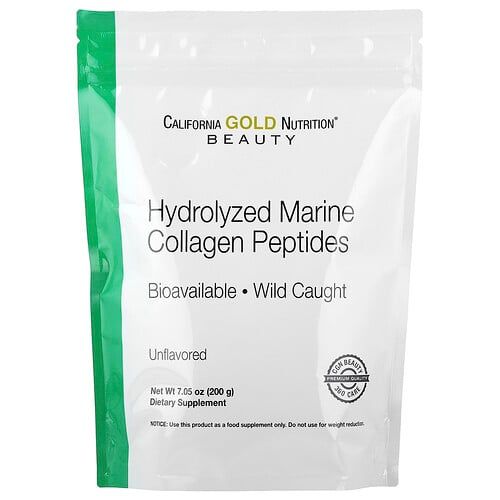
California Gold Nutrition Hydrolyzed Marine Collagen Peptides, Unflavored
5 g collagen per serving
Collagen from fish, with nothing else added on the label.
Marine, with vitamin C
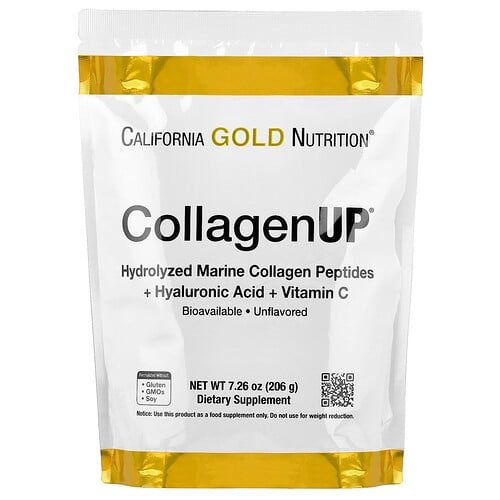
California Gold Nutrition CollagenUP, Marine Collagen Peptides with Hyaluronic Acid and Vitamin C, Unflavored
5 g collagen per serving
The label also lists 90 mg vitamin C and 60 mg hyaluronic acid per serving.
Tablets, not powder
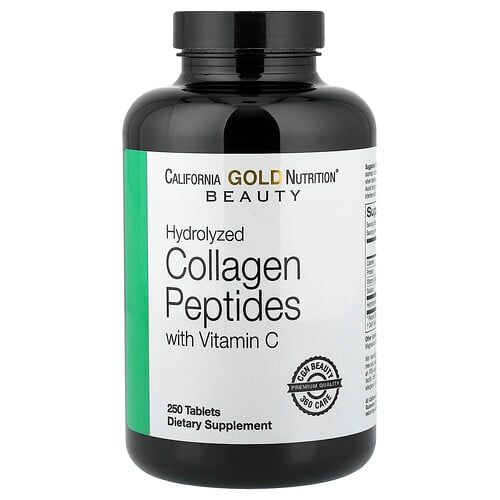
California Gold Nutrition Hydrolyzed Collagen Peptides + Vitamin C, Type I & III
6 g collagen per serving
Tablets, for people who’d rather not mix a powder.
Each pick follows a fixed rule applied to the label facts (labels checked November 3, 2026); nothing here is paid for. Retailer buttons are affiliate links. Strengths and limitations of each product are further down.
How each pick is chosen
- Most collagen per serving: The most collagen per serving, shown only when one product clearly leads.
- Plain marine collagen: Collagen from fish, with no added ingredients on the label.
- Marine, with vitamin C: Collagen from fish with vitamin C listed on the label.
- Tablets, not powder: Tablets rather than a powder.
In this article (6)
Collagen powders and tablets look alike on the shelf, but their labels differ in ways that matter: how many grams you get per serving, which animal the collagen comes from, and what has been added to it. This comparison lines up six collagen supplements sold on iHerb on what their labels actually say, and then looks at what the research on collagen supplements does and doesn’t show.
How we chose these six
- Sold on iHerb, with a label record in the US National Institutes of Health’s Dietary Supplement Label Database (DSLD) that matches the iHerb listing by barcode. Several other collagen products were left out because their DSLD record didn’t match the iHerb listing or had been marked off the market.
- Collagen as the main ingredient. We left out blends where collagen is one of many ingredients, and type II collagen products sold for joints, which are a different kind of product.
- Different approaches: fish and bovine collagen, plain powders and one with added vitamin C and hyaluronic acid, and a tablet.
We haven’t tested these products and don’t rank them. Each one is described by its label, and our guide to reading a Supplement Facts label explains the general parts of the panel.
The labels side by side
| Product | | 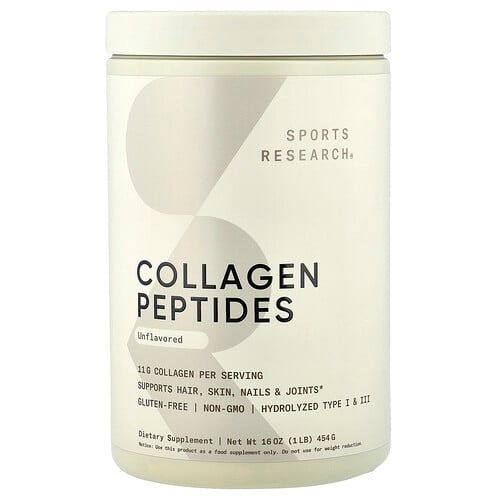 | 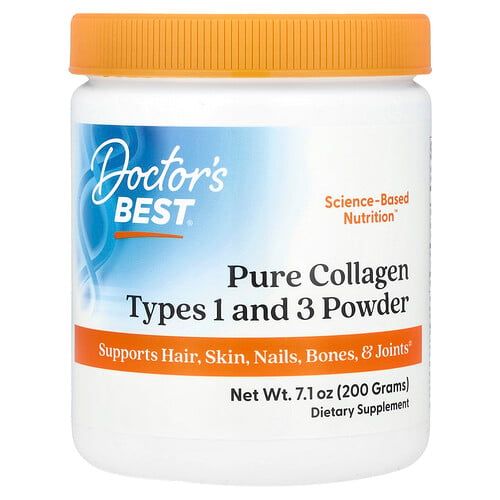 | | | |
|---|---|---|---|---|---|---|
| Serving size | 1–2 scoops (10–20 g) | 1 scoop (11 g) | 1 scoop (6.6 g) | 1 scoop (5 g) | 1 scoop (5 g) | 6 tablets |
| Collagen per serving | 20 g of bovine collagen peptides per 2 scoops (18 g protein) | 11 g of hydrolysed bovine collagen peptides, types I and III (10 g protein) | 6.6 g of hydrolysed bovine collagen, types 1 and 3 (6 g protein) | 5 g of hydrolysed marine collagen peptides (4 g protein) | 5 g of hydrolysed marine collagen peptides (4 g protein) | 6 g of hydrolysed collagen peptides, types I and III (5 g protein) |
| Collagen source | Bovine hide (grass-fed, pasture-raised, according to the label) | Bovine hides from the USA, New Zealand and/or Australia; made in Korea | Bovine | Fish (one or more of 10 named species, such as cod, tilapia and salmon) | Fish (barramundi or red snapper) | Not stated (the label says it isn’t made with fish) |
| Added ingredients | None | None | None | Vitamin C 90 mg (100% DV), hyaluronic acid 60 mg | None | Vitamin C 60 mg (67% DV); stearic acid, magnesium stearate, silica |
| Directions on the label | 1–2 scoops in 8 fl oz (240 ml) of liquid, hot or cold | 1 scoop 1–2 times a day in a drink or meal | 1 scoop a day in water or juice, at least 30 minutes before meals | 1 scoop a day in water or juice, on an empty stomach | 1 scoop a day in water or juice, on an empty stomach | 6 tablets a day on an empty stomach |
| Servings per pack | About 14 (of 20 g) | 41 | 30 | 41 | 40 | 42 |
| Where to buy |
What the comparison shows
From 5 to 20 grams. The amount per serving varies fourfold: 5 g in CollagenUP and in California Gold Nutrition’s plain marine collagen, 6 g in six tablets, 6.6 g in Doctor’s Best, 11 g in Sports Research and up to 20 g (two scoops) in Vital Proteins. Each label also gives a protein figure that is a little lower than the collagen weight, for example 11 g of collagen and 10 g of protein. A 2019 paper put the amounts reported as effective in collagen studies at roughly 2.5 to 15 g a day; one of its authors provides research services to a maker of collagen supplements. A bigger serving also empties the tub faster: Vital Proteins’ 284 g lasts about 14 servings at 20 g, while Sports Research’s 454 g lasts 41.
Fish or cattle. CollagenUP is made from fish and lists ten possible species, and the same brand’s plain marine collagen lists barramundi or red snapper, so neither is suitable for anyone with a fish allergy. Sports Research, Vital Proteins and Doctor’s Best are bovine; Sports Research names the countries its hides come from (the USA, New Zealand and Australia) and says the powder is made in Korea. The California Gold Nutrition tablets don’t name the animal, only that they aren’t made with fish.
Added ingredients. CollagenUP adds 90 mg of vitamin C (100% of the Daily Value) and 60 mg of hyaluronic acid, and the tablets add 60 mg of vitamin C. The body needs vitamin C to make its own collagen, as the US National Library of Medicine’s MedlinePlus explains, but you also get it from fruit and vegetables, and the labels don’t show that adding it to a collagen supplement changes anything. The other four powders list nothing but collagen. Vitamin C on its own is compared in vitamin C supplements on iHerb.
Powder or tablets. Six tablets provide 6 g of collagen, so the tablet form means taking several at once for an amount at the low end of the powders. The tablets also contain stearic acid, magnesium stearate and silica, which help with manufacturing.
Testing seal. The Sports Research label carries the Informed Choice seal. Informed Choice is run by LGC and tests retail samples of finished products monthly for substances banned in sport. That is useful information for athletes; it doesn’t test whether the product does what its label suggests.
Directions. Three labels suggest taking the product on an empty stomach, and Doctor’s Best also suggests not taking other protein supplements within an hour. These are the manufacturers’ directions, and the labels don’t cite evidence for them.
Collagen as protein. Collagen protein lacks tryptophan, one of the essential amino acids, so it is classed as an incomplete protein. It can count towards your protein intake but can’t be your only source.
The products
Most collagen per serving
Vital Proteins
Collagen Peptides, Unflavored
284 g powder
Single-ingredient bovine collagen with the largest serving here, up to 20 g; about 14 servings per tub.
- Serving size
- 1–2 scoops (10–20 g)
- Collagen per serving
- 20 g of bovine collagen peptides per 2 scoops (18 g protein)
- Collagen source
- Bovine hide (grass-fed, pasture-raised, according to the label)
- Added ingredients
- None
- Directions on the label
- 1–2 scoops in 8 fl oz (240 ml) of liquid, hot or cold
- Servings per pack
- About 14 (of 20 g)
Key facts
- Up to 20 g of bovine collagen peptides per serving of 2 scoops: the most in this comparison.
- One ingredient; the label says it mixes into hot or cold liquids.
Worth weighing up
- At 20 g per serving, the 284 g tub holds only about 14 servings.
- Made in a facility that also processes milk, fish and tree nuts, according to the label.
Third-party testing seal
Sports Research
Collagen Peptides, Unflavored
454 g powder
Single-ingredient bovine collagen, 11 g per scoop, with an Informed Choice seal on the label.
- Serving size
- 1 scoop (11 g)
- Collagen per serving
- 11 g of hydrolysed bovine collagen peptides, types I and III (10 g protein)
- Collagen source
- Bovine hides from the USA, New Zealand and/or Australia; made in Korea
- Added ingredients
- None
- Directions on the label
- 1 scoop 1–2 times a day in a drink or meal
- Servings per pack
- 41
Key facts
- 11 g of bovine collagen peptides per scoop, with no other ingredients listed.
- The label carries the Informed Choice seal, a testing programme for substances banned in sport.
Worth weighing up
- Made from cattle hides.
- The label notes that it can clump in cold liquids and suggests mixing it into a room-temperature drink first.
Plain bovine collagen, 6.6 g per scoop with nothing else listed; 30 servings per tub.
- Serving size
- 1 scoop (6.6 g)
- Collagen per serving
- 6.6 g of hydrolysed bovine collagen, types 1 and 3 (6 g protein)
- Collagen source
- Bovine
- Added ingredients
- None
- Directions on the label
- 1 scoop a day in water or juice, at least 30 minutes before meals
- Servings per pack
- 30
Key facts
- 6.6 g of bovine collagen per scoop; the label lists no other ingredients.
- The smallest tub here, 30 servings of 200 g.
Worth weighing up
- Made from cattle.
- The label suggests not taking other protein supplements within an hour of it; that’s the manufacturer’s advice, not something we’ve seen tested.
Marine, with vitamin C
California Gold Nutrition
CollagenUP, Marine Collagen Peptides with Hyaluronic Acid and Vitamin C, Unflavored
206 g powder
iHerb’s own-brand marine collagen: 5 g per scoop with vitamin C and hyaluronic acid; contains fish.
- Serving size
- 1 scoop (5 g)
- Collagen per serving
- 5 g of hydrolysed marine collagen peptides (4 g protein)
- Collagen source
- Fish (one or more of 10 named species, such as cod, tilapia and salmon)
- Added ingredients
- Vitamin C 90 mg (100% DV), hyaluronic acid 60 mg
- Directions on the label
- 1 scoop a day in water or juice, on an empty stomach
- Servings per pack
- 41
Key facts
- 5 g of marine collagen peptides per scoop, with 90 mg of vitamin C and 60 mg of hyaluronic acid.
- Unflavoured powder; the label suggests mixing it into room-temperature water or juice.
Worth weighing up
- Made from fish, so it doesn’t suit people with a fish allergy.
- At 5 g per scoop it has the least collagen per serving in this comparison.
Plain marine collagen
California Gold Nutrition
Hydrolyzed Marine Collagen Peptides, Unflavored
200 g powder
iHerb’s own-brand plain marine collagen: 5 g per scoop with nothing added; contains fish.
- Serving size
- 1 scoop (5 g)
- Collagen per serving
- 5 g of hydrolysed marine collagen peptides (4 g protein)
- Collagen source
- Fish (barramundi or red snapper)
- Added ingredients
- None
- Directions on the label
- 1 scoop a day in water or juice, on an empty stomach
- Servings per pack
- 40
Key facts
- Plain marine collagen: 5 g of fish collagen peptides per scoop, with nothing else added.
- The same brand’s marine collagen as CollagenUP, without the vitamin C and hyaluronic acid.
Worth weighing up
- Made from fish, so it doesn’t suit people with a fish allergy.
- At 5 g per scoop it shares the smallest powder serving in this comparison with CollagenUP.
Tablet option
California Gold Nutrition
Hydrolyzed Collagen Peptides + Vitamin C, Type I & III
250 tablets
Collagen in tablets: 6 tablets for 6 g, with vitamin C; the animal source isn’t stated.
- Serving size
- 6 tablets
- Collagen per serving
- 6 g of hydrolysed collagen peptides, types I and III (5 g protein)
- Collagen source
- Not stated (the label says it isn’t made with fish)
- Added ingredients
- Vitamin C 60 mg (67% DV); stearic acid, magnesium stearate, silica
- Directions on the label
- 6 tablets a day on an empty stomach
- Servings per pack
- 42
Key facts
- A tablet option: 6 tablets give 6 g of collagen peptides and 60 mg of vitamin C.
- The label says it isn’t made with milk, eggs, fish or shellfish.
Worth weighing up
- It takes 6 tablets to get 6 g, a smaller amount than most powder servings here.
- The label doesn’t say which animal the collagen comes from.
What the research does and doesn’t show
These labels mention support for skin, hair, nails, joints and bones. The research is less settled than that list suggests.
A 2021 meta-analysis of 19 randomised trials, with 1,125 participants of whom 95% were women, concluded that hydrolysed collagen improved skin hydration, elasticity and wrinkles after 90 days. A 2025 meta-analysis in The American Journal of Medicine pooled 23 trials with 1,474 participants and split them by funding and quality. Across all trials it also found improvements. But in trials not funded by companies there was no effect on hydration, elasticity or wrinkles, and the higher-quality trials showed no significant effect in any category. The authors concluded that there is currently no clinical evidence to support collagen supplements for preventing or treating skin ageing.
For joints, a 2023 meta-analysis of four trials (507 people with knee osteoarthritis) found less pain with collagen peptides than with placebo, but rated all four trials at high risk of bias and called for better-designed studies.
So the honest summary is: much of the positive research was funded by the industry, and better studies haven’t confirmed the effect on skin. None of these labels claims to treat a condition, and the FDA hasn’t evaluated the claims they do make.
Before you buy
Check the safety notes below, especially if you have a fish allergy or have had kidney stones. Some of these labels also ask people who are pregnant, breastfeeding, taking prescription medicines or living with a medical condition to talk to a professional first.
Sources
The research and official guidance this article draws on.
- California Gold Nutrition CollagenUP Unflavored, 206 g (label 318828). NIH Dietary Supplement Label Database (checked )
- Sports Research Collagen Peptides Unflavored, 454 g (label 309608). NIH Dietary Supplement Label Database (checked )
- Vital Proteins Collagen Peptides Unflavored, 284 g (label 302833). NIH Dietary Supplement Label Database (checked )
- Doctor’s Best Pure Collagen Types 1 and 3 Powder, 200 g (label 269490). NIH Dietary Supplement Label Database (checked )
- California Gold Nutrition Hydrolyzed Collagen + Vitamin C, 250 tablets (label 273719). NIH Dietary Supplement Label Database (checked )
- Effects of Collagen Supplements on Skin Aging: A Systematic Review and Meta-Analysis of Randomized Controlled Trials. The American Journal of Medicine, 2025 (checked )
- Effects of hydrolyzed collagen supplementation on skin aging: a systematic review and meta-analysis. International Journal of Dermatology, 2021 (checked )
- Analgesic efficacy of collagen peptide in knee osteoarthritis: a meta-analysis of randomized controlled trials. Journal of Orthopaedic Surgery and Research, 2023 (checked )
- Significant Amounts of Functional Collagen Peptides Can Be Incorporated in the Diet While Maintaining Indispensable Amino Acid Balance. Nutrients, 2019 (checked )
- Vitamin C. MedlinePlus (US National Library of Medicine) (checked )
- Hydroxyproline ingestion and urinary oxalate and glycolate excretion. Kidney International, 2006 (checked )
- Informed Choice: retail monitoring banned substance testing programme. LGC (Informed) (checked )
This article is general information, not medical advice. Whether a supplement suits you depends on your health, diet and any medication you take, which a doctor or pharmacist can help you weigh up. Read our medical disclaimer.
Who wrote this
Nourlume is an independent online publication about supplements, skincare and everyday wellness. Pieces credited to Nourlume rather than a named writer follow our editorial policy, which explains how we research, source and update our work.