Buying guide
Creatine on iHerb: Four Creatine Monohydrate Labels Compared
Four creatine monohydrate supplements on iHerb compared on their labels: grams per serving, loading directions, testing seals, powder or capsules.
Affiliate links. Some links on this page are affiliate links: if you buy through them, Nourlume may earn a commission at no extra cost to you. Affiliate relationships do not determine our editorial conclusions. About affiliate links
Choose by situation
From the 4 labels compared below · no ratings, no “best”
Shown for the country your connection appears to come from (we don’t store it). iHerb sets the terms, so check that the discount applies at checkout. Affiliate link.
NSF Certified for Sport
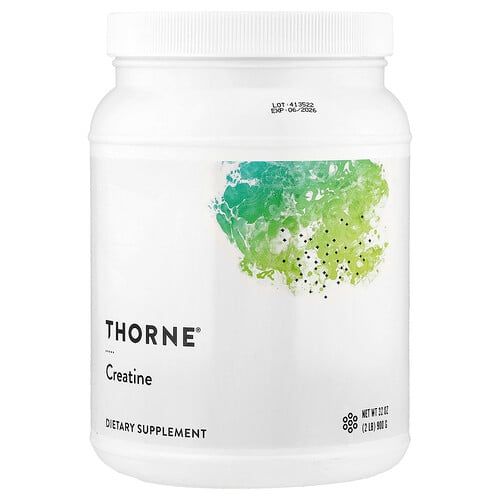
Thorne Creatine
5 g creatine per serving
The label shows the NSF Certified for Sport seal.
Micronized powder
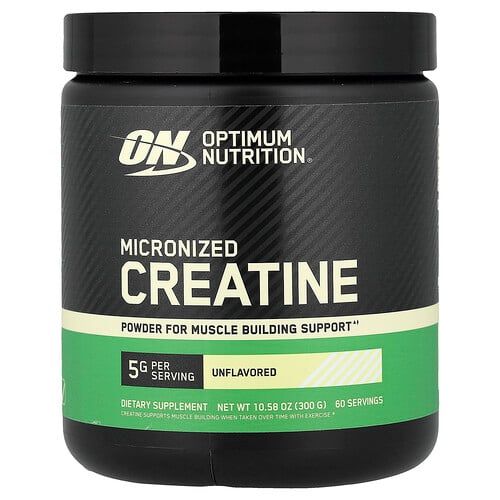
Optimum Nutrition Micronized Creatine Powder, Unflavored
5 g creatine per serving
Labelled micronized: ground to a finer powder.
Capsules, not powder
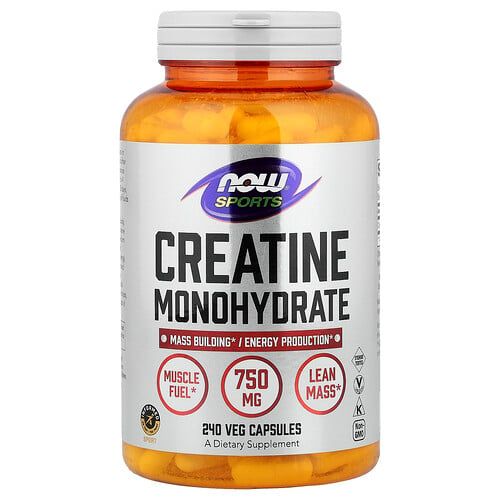
NOW Foods Sports Creatine Monohydrate 750 mg
4.5 g creatine per serving
Capsules, for people who’d rather not mix a powder.
Smallest tub
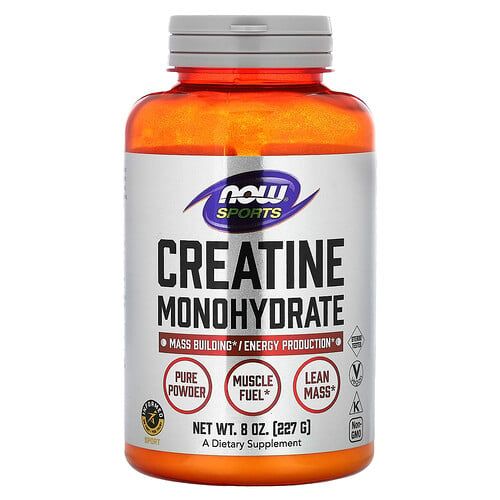
NOW Foods Sports Creatine Monohydrate Powder
5 g creatine per serving
45 servings: the smallest powder tub here.
Each pick follows a fixed rule applied to the label facts (labels checked November 3, 2026); nothing here is paid for. Retailer buttons are affiliate links. Strengths and limitations of each product are further down.
How each pick is chosen
- NSF Certified for Sport: Shows the NSF Certified for Sport seal on the label.
- Micronized powder: The label says micronized.
- Capsules, not powder: Capsules rather than a powder.
- Smallest tub: The powder with the fewest servings per tub, shown only when one clearly has the fewest.
In this article (6)
Creatine is one of the few sports supplements where most products contain the same thing: creatine monohydrate, usually 5 g per serving. So the useful comparison isn’t about the ingredient. It’s about what the labels tell you to do with it, which independent testing seal they carry, and whether you want a powder or capsules. This comparison lines up four creatine supplements sold on iHerb on what their labels actually say, and then looks at what the research shows, including who did it.
How we chose these four
- Sold on iHerb, with a label record in the US National Institutes of Health’s Dietary Supplement Label Database (DSLD) that matches the iHerb listing by barcode and is still marked as on the market. Several creatine products, including iHerb’s own California Gold Nutrition creatine and every creatine gummy we checked, had no matching record, so they aren’t here.
- Creatine monohydrate only. It is the most extensively studied form, and a 2021 review by researchers in the field concluded that other forms aren’t superior to it. We left out blends with caffeine, amino acids or other ingredients.
- Different approaches: two powders with and without a loading phase, a large tub with a different testing seal, and capsules.
We haven’t tested these products and don’t rank them. Each one is described by its label, and our guide to reading a Supplement Facts label explains the general parts of the panel.
The labels side by side
| Product | | | | |
|---|---|---|---|---|
| Serving size | 1½ teaspoons (5 g) | 1 rounded teaspoon (5 g) | 1 scoop (5 g) | 6 capsules |
| Creatine per serving | 5 g of creatine monohydrate | 5 g of creatine monohydrate | 5 g of creatine monohydrate | 4.5 g of creatine monohydrate (750 mg per capsule) |
| Form on the label | Creatine monohydrate, no other ingredients | Micronized creatine monohydrate | Creatine monohydrate | Creatine monohydrate in plant-based capsules (hypromellose, stearic acid) |
| Testing seal on the label | Informed Choice | Informed Choice | NSF Certified for Sport | Informed Choice |
| Directions on the label | Loading phase: 3–4 servings a day for 7 days, then 1–3 a day; 1 a day for use beyond 28 days | 5 g in a shake or drink; no loading phase | 1 scoop a day in at least 8 fl oz (240 ml) of liquid, 30–90 minutes before or after exercise | Loading phase: 6 capsules 3–4 times a day for 7 days, then 1–3 times a day; 6 a day for use beyond 28 days |
| Servings per pack | 45 | 60 | 180 | 40 |
| Where to buy |
What the comparison shows
The same ingredient in the same amount. The three powders give 5 g of creatine monohydrate per serving and list nothing else. The capsules give 4.5 g in six capsules, with the capsule shell and stearic acid as the only other ingredients.
Loading phase or not. This is the biggest difference between the labels. Both NOW labels start with a week of 3–4 servings a day (15–20 g of creatine), then drop to 1–3 servings, and one a day for use beyond 28 days. Optimum Nutrition and Thorne give a single serving a day with no loading phase. Researchers describe both routes: the ISSN position stand lists 5 g four times a day for 5–7 days as the most effective way to increase muscle creatine stores, and 3 g a day for 28 days as an alternative. In a study cited in a 2021 review, muscle creatine rose by a similar amount, about 20%, after 3 g a day for 28 days or 20 g a day for 6 days. In that study, loading got there sooner but not further.
Micronized. Optimum Nutrition’s creatine is micronized, meaning ground into finer particles. The label doesn’t claim it works differently from regular creatine monohydrate.
Testing seals. NOW and Optimum Nutrition carry the Informed Choice seal, a programme run by LGC that tests retail samples of finished products monthly for substances banned in sport. Thorne carries NSF Certified for Sport, which NSF says tests for more than 280 banned substances. Both matter mainly to athletes who are drug-tested. Neither seal is a test of whether the product improves performance.
Powder or capsules. Six capsules provide 4.5 g, so the capsules mean taking six at a time, and NOW’s first-week directions would mean 18–24 capsules a day. The powders mix into a drink instead.
How long a tub lasts. The servings range from 40 (capsules) and 45 (NOW powder) to 60 (Optimum Nutrition) and 180 (Thorne’s 900 g tub).
The products
Plain powder, smallest tub
NOW Foods
Sports Creatine Monohydrate Powder
227 g powder
Plain creatine monohydrate, 5 g per serving, with an Informed Choice seal and a loading phase in its directions.
- Serving size
- 1½ teaspoons (5 g)
- Creatine per serving
- 5 g of creatine monohydrate
- Form on the label
- Creatine monohydrate, no other ingredients
- Testing seal on the label
- Informed Choice
- Directions on the label
- Loading phase: 3–4 servings a day for 7 days, then 1–3 a day; 1 a day for use beyond 28 days
- Servings per pack
- 45
Key facts
- 5 g of creatine monohydrate per serving and nothing else.
- The label carries the Informed Choice seal and is marked vegan, halal and kosher.
Worth weighing up
- The label’s first-week directions add up to 15–20 g a day; research suggests muscle creatine ends up similar after about four weeks without a loading phase.
- The label asks people who are pregnant, nursing, taking medication or living with a medical condition, especially a kidney condition, to consult a physician.
Micronized, no loading phase
Optimum Nutrition
Micronized Creatine Powder, Unflavored
300 g powder
Micronized creatine monohydrate, 5 g per serving, with an Informed Choice seal and no loading phase on the label.
- Serving size
- 1 rounded teaspoon (5 g)
- Creatine per serving
- 5 g of creatine monohydrate
- Form on the label
- Micronized creatine monohydrate
- Testing seal on the label
- Informed Choice
- Directions on the label
- 5 g in a shake or drink; no loading phase
- Servings per pack
- 60
Key facts
- 5 g of micronized creatine monohydrate per serving.
- The label carries the Informed Choice seal and gives no loading phase.
Worth weighing up
- “Micronized” means the powder is ground into finer particles; the label doesn’t claim it works differently.
- The label says it isn’t for anyone under 18 or for women who are pregnant, trying to get pregnant or nursing.
Creatine monohydrate, 5 g per scoop, NSF Certified for Sport, in a 180-serving tub.
- Serving size
- 1 scoop (5 g)
- Creatine per serving
- 5 g of creatine monohydrate
- Form on the label
- Creatine monohydrate
- Testing seal on the label
- NSF Certified for Sport
- Directions on the label
- 1 scoop a day in at least 8 fl oz (240 ml) of liquid, 30–90 minutes before or after exercise
- Servings per pack
- 180
Key facts
- 5 g of creatine monohydrate per scoop, in the largest tub here: 180 servings.
- The label carries the NSF Certified for Sport seal.
Worth weighing up
- The label also mentions the brain and nerves; the research summarised below is about exercise performance.
- Its only caution is for pregnancy; it doesn’t mention kidney conditions, which other sources do.
Creatine monohydrate in capsules, 6 for 4.5 g, with an Informed Choice seal; 40 servings.
- Serving size
- 6 capsules
- Creatine per serving
- 4.5 g of creatine monohydrate (750 mg per capsule)
- Form on the label
- Creatine monohydrate in plant-based capsules (hypromellose, stearic acid)
- Testing seal on the label
- Informed Choice
- Directions on the label
- Loading phase: 6 capsules 3–4 times a day for 7 days, then 1–3 times a day; 6 a day for use beyond 28 days
- Servings per pack
- 40
Key facts
- A capsule option: 6 capsules give 4.5 g of creatine monohydrate.
- Informed Choice seal; marked vegan, halal and kosher.
Worth weighing up
- It takes 6 capsules for 4.5 g, and the label’s first-week directions mean 18–24 capsules a day.
- The label asks people who are pregnant, nursing, taking medication or living with a medical condition, especially a kidney condition, to consult a physician.
What the research shows, and who did it
The body makes creatine and stores it mainly in muscle, and the diet adds some from red meat, fish and milk, as the MSD Manual explains. Supplements are taken to raise the amount stored in muscle.
Strength and power. A 2025 meta-analysis of 69 randomised trials with 1,937 participants found that creatine combined with resistance training gave small but statistically significant gains over placebo: about 1.4 kg on the bench or chest press and 5.6 kg on the squat, plus small improvements in jump height and cycling sprint power. There was no significant difference in handgrip or leg press strength, and the benefits were most consistent in younger adults and men; older adults and women showed smaller or no significant changes in several measures. The MSD Manual’s summary is similar: creatine may be a slight help to athletes who need sudden bursts of power, but the effects are unlikely to be large.
Who wrote the most positive reviews. Much of the creatine literature comes from the International Society of Sports Nutrition (ISSN). Its 2017 position stand concludes that creatine is effective and that up to 30 g a day for five years has been safe and well tolerated in healthy people. Its lead author prepared the 2017 update at the request of the Council for Responsible Nutrition, a US supplement industry association, and the ISSN. Many authors of that paper and of the 2021 review mentioned above disclose advisory roles, research funding or speaker fees from companies that make or sell creatine, including the creatine manufacturer AlzChem. That doesn’t make the findings wrong, but it is worth knowing when you read them.
Kidneys and blood tests. Creatine breaks down into creatinine, the marker doctors use to estimate kidney function. A 2025 meta-analysis whose authors declared no competing interests found a small rise in blood creatinine with creatine but no significant change in the kidneys’ filtration rate, and concluded that the rise is likely due to creatine turnover rather than kidney damage. The MSD Manual still advises people with a history of kidney problems, or who take medicines that affect the kidneys, to avoid creatine.
Hair loss. The worry is that creatine might raise DHT, a hormone linked to hair loss. In a 12-week randomised trial published in 2025, 45 resistance-trained men aged 18 to 40 took 5 g of creatine or a placebo daily; among the 38 who finished, there were no differences in DHT or in hair density and thickness. It was a small, short study, and several authors disclose ties to creatine companies or the ISSN.
Caffeine. The MSD Manual notes that caffeine may reduce the benefit of creatine.
Before you buy
Check the safety notes below, especially if you have kidney problems or a blood test coming up. NOW’s labels say they are for adults only, and Optimum Nutrition’s label excludes anyone under 18 and women who are pregnant, trying to get pregnant or nursing.
Sources
The research and official guidance this article draws on.
- NOW Sports Creatine Monohydrate, 227 g (label 314256). NIH Dietary Supplement Label Database (checked )
- Optimum Nutrition Micronized Creatine Powder Unflavored, 300 g (label 319465). NIH Dietary Supplement Label Database (checked )
- Thorne Creatine, 900 g (label 336326). NIH Dietary Supplement Label Database (checked )
- NOW Sports Creatine Monohydrate 750 mg, 240 veg capsules (label 314259). NIH Dietary Supplement Label Database (checked )
- Creatine. MSD Manual Consumer Version (checked )
- The Effects of Creatine Supplementation on Upper- and Lower-Body Strength and Power: A Systematic Review and Meta-Analysis. Nutrients, 2025 (checked )
- International Society of Sports Nutrition position stand: safety and efficacy of creatine supplementation in exercise, sport, and medicine. Journal of the International Society of Sports Nutrition, 2017 (checked )
- Common questions and misconceptions about creatine supplementation: what does the scientific evidence really show?. Journal of the International Society of Sports Nutrition, 2021 (checked )
- Effect of creatine supplementation on kidney function: a systematic review and meta-analysis. BMC Nephrology, 2025 (checked )
- Does creatine cause hair loss? A 12-week randomized controlled trial. Journal of the International Society of Sports Nutrition, 2025 (checked )
- Informed Choice: retail monitoring banned substance testing programme. LGC (Informed) (checked )
- NSF Certified for Sport. NSF (checked )
This article is general information, not medical advice. Whether a supplement suits you depends on your health, diet and any medication you take, which a doctor or pharmacist can help you weigh up. Read our medical disclaimer.
Who wrote this
Nourlume is an independent online publication about supplements, skincare and everyday wellness. Pieces credited to Nourlume rather than a named writer follow our editorial policy, which explains how we research, source and update our work.