Article
Types of Magnesium Supplements: How the Forms Differ
Oxide, citrate, glycinate, malate, threonate: how magnesium supplement forms differ in magnesium content, absorption evidence and side effects.
Affiliate links. Some links on this page are affiliate links: if you buy through them, Nourlume may earn a commission at no extra cost to you. Affiliate relationships do not determine our editorial conclusions. About affiliate links
What changed: Added NOW Foods magnesium citrate and malate to the label examples, including a “1,000 mg” malate tablet that supplies 115 mg of magnesium.

In this article (6)
A magnesium supplement never contains magnesium on its own. The mineral is always bound to something else: oxygen in magnesium oxide, citric acid in citrate, the amino acid glycine in glycinate. That partner molecule decides how much of each capsule is actually magnesium, and it may affect how well the magnesium is absorbed and how kind it is to your gut.
This guide walks through the forms you’ll see most often, what the research does and doesn’t show about each, and which number on the label to compare.
The forms at a glance
| Form | Partner molecule | Share that is magnesium* | What the human evidence shows |
|---|---|---|---|
| Magnesium oxide | Oxygen (inorganic) | about 60% | Consistently less well absorbed than organic forms in comparison studies |
| Magnesium chloride | Chlorine (inorganic) | about 25% | In one small study, absorbed about as well as lactate and aspartate |
| Magnesium citrate | Citric acid | about 16% | Better absorbed than oxide in head-to-head studies; also used as a laxative at high amounts |
| Magnesium malate | Malic acid | about 16% | Little human research; most data come from animals |
| Magnesium glycinate (bisglycinate) | Glycine, an amino acid | about 14% | Few direct comparisons with other organic forms; one recent sleep trial |
| Magnesium taurate | Taurine | about 9% | Very little human research |
| Magnesium L-threonate | Threonic acid | about 8% | Animal studies and a small trial run by the compound’s developer |
*Calculated from molecular weights in PubChem for the pure compounds. Commercial ingredients can contain water or be blended with other forms, so the actual magnesium content is the figure on the Supplement Facts panel.
Choose by situation
From 8 labels we checked · no ratings, no “best”
Already know what you need? These are the labels that fit each situation.
Glycinate
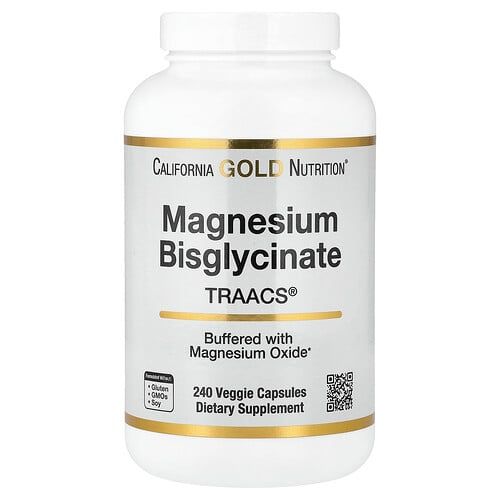
California Gold Nutrition Magnesium Bisglycinate Chelate (Albion TRAACS)
200 mg magnesium per serving (2 capsules)
Magnesium bound to glycine (glycinate), as named on the label.
Citrate
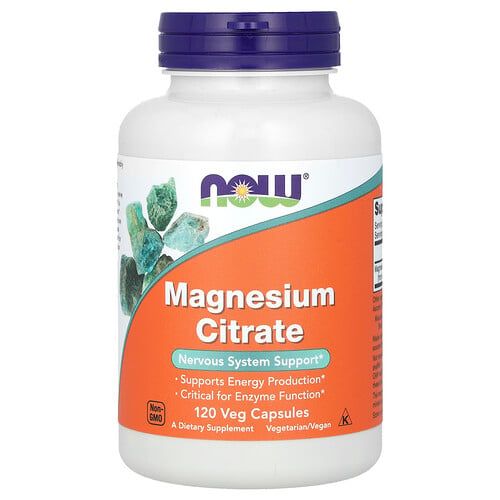
NOW Foods Magnesium Citrate
400 mg magnesium per serving (3 capsules)
Magnesium citrate, as named on the label.
Malate
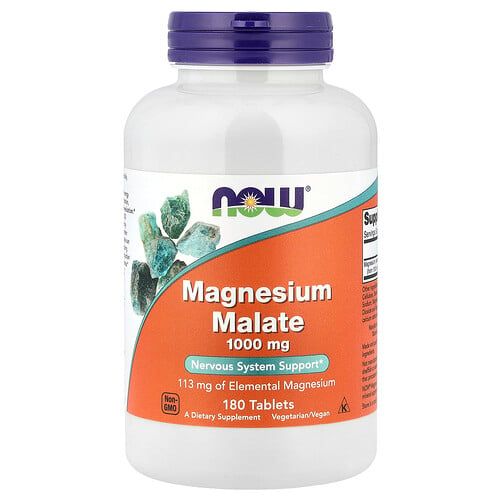
NOW Foods Magnesium Malate 1,000 mg
115 mg magnesium per serving (1 tablet)
The “1,000 mg” on the front is the magnesium malate compound; the magnesium itself is 115 mg per tablet.
L-threonate
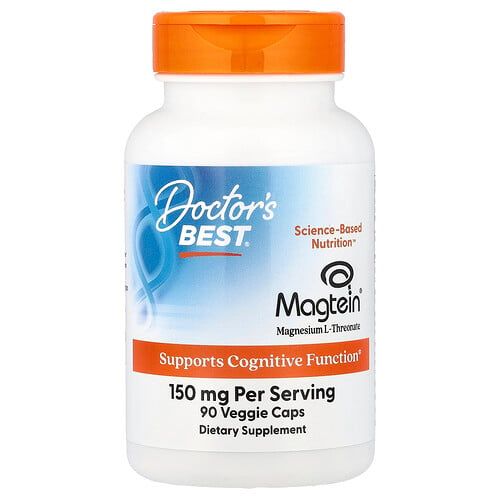
Doctor’s Best Brain Magnesium with Magtein (magnesium L-threonate)
150 mg magnesium per serving (3 capsules)
Magnesium L-threonate (Magtein), as named on the label.
Fewest pills per serving
Pure Encapsulations Magnesium (citrate)
150 mg magnesium per serving (1 capsule)
One of 3 labels here with 1 capsule or tablet per serving.
Labelled vegan
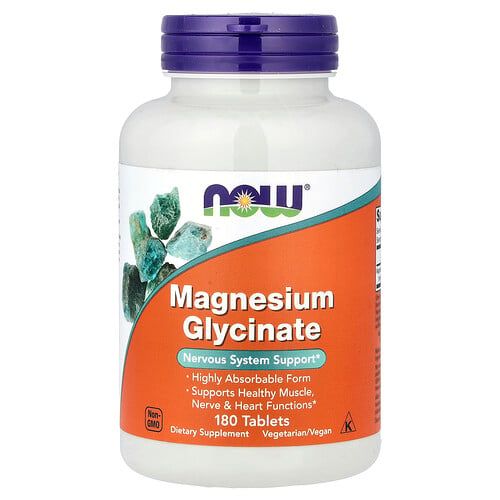
NOW Foods Magnesium Glycinate
200 mg magnesium per serving (2 tablets)
Vegan, as stated on the label; 90 servings per bottle.
Each pick follows a fixed rule applied to the label facts (labels checked October 17, 2026 – October 18, 2026); nothing here is paid for. Retailer buttons are affiliate links.
How each pick is chosen
- Glycinate: Magnesium in this form, as named on the label; if several, the one with the most magnesium per serving.
- Citrate: Magnesium in this form, as named on the label; if several, the one with the most magnesium per serving.
- Malate: Magnesium in this form, as named on the label; if several, the one with the most magnesium per serving.
- L-threonate: Magnesium in this form, as named on the label; if several, the one with the most magnesium per serving.
- Fewest pills per serving: The fewest capsules or tablets per serving; if several share it, the one with more magnesium per serving.
- Labelled vegan: The label says vegan; if several do, the one with more servings per bottle.
Why 1,000 mg of “magnesium glycinate” isn’t 1,000 mg of magnesium
Because the partner molecule adds weight, forms with a large partner carry little magnesium per gram. Three real labels show the difference:
- NOW Foods Magnesium Glycinate lists 2,000 mg of magnesium bisglycinate per serving, which supplies 200 mg of magnesium.
- Doctor’s Best Brain Magnesium lists 2,085 mg of magnesium L-threonate per serving, which supplies 150 mg of magnesium.
- NOW Foods Magnesium Malate is sold as “1,000 mg”. That is the weight of the magnesium malate in each tablet, which supplies 115 mg of magnesium.
US rules require the Supplement Facts panel to show the weight of magnesium itself, so that is the figure to compare across forms. Our guide to comparing magnesium supplement labels covers the rest of the label.
| Product | | | Pure EncapsulationsMagnesium (citrate)90 capsules | | |
|---|---|---|---|---|---|
| Form named on the label | Albion magnesium bisglycinate, 2,000 mg per serving | Magnesium citrate, 2,667 mg per serving | Magnesium citrate | Magnesium malate, 1,000 mg per tablet | Magtein magnesium L-threonate, 2,085 mg per serving |
| Magnesium per serving | 200 mg (2 tablets) | 400 mg (3 capsules) | 150 mg (1 capsule) | 115 mg (1 tablet) | 150 mg (3 capsules) |
| Per capsule or tablet | 100 mg | About 133 mg | 150 mg | 115 mg | 50 mg |
| Where to buy |
What absorption studies show
The best overview is a 2021 systematic review that screened 433 studies and included 14 comparing magnesium forms. It concluded that inorganic forms, such as oxide, appear less bioavailable than organic forms, and that the share absorbed depends on the dose. It also concluded that all the forms studied could maintain normal magnesium levels in healthy people without a deficit, while noting this couldn’t be assumed for older people or people with illnesses or low levels.
Two older human studies give a sense of the size of the gap with oxide:
- Citrate vs oxide (1990). Magnesium oxide was almost insoluble in water, and magnesium citrate was far more soluble at every level of stomach acid tested. After a single dose, the rise in urinary magnesium (a marker of absorption) was much larger with citrate than with oxide.
- Four US products (2001). Using the same urinary marker, fractional absorption of magnesium oxide was about 4%, while magnesium chloride, lactate and aspartate were absorbed better, and about equally. The authors concluded that some inorganic salts can be as bioavailable as organic ones, so “organic” isn’t automatically “better”.
The product itself matters too. A 2019 study tested 15 commercial magnesium products in laboratory models and found very wide differences in how well they dissolved. Two products with opposite laboratory results were then given to 30 people, and the one that performed poorly in the lab also produced a much smaller rise in blood magnesium. Two capsules with the same form on the label can behave differently.
Form by form
Magnesium oxide
The most magnesium per gram of any common form, so a lot of magnesium fits into a small tablet. It is also the form most consistently found to be poorly absorbed. If a label lists oxide, a high milligram figure may translate into less absorbed magnesium than the number suggests.
Magnesium citrate
Magnesium bound to citric acid. It was better absorbed than oxide in the comparisons above. In much larger amounts, magnesium citrate is also sold as a saline laxative, as MedlinePlus explains, so looser stools at higher intakes aren’t surprising. Our magnesium glycinate vs citrate comparison looks at it in more detail.
Magnesium glycinate and bisglycinate
Magnesium bound to glycine. “Bisglycinate” means two glycine molecules per magnesium; labels also say “glycinate chelate”. Some products use branded ingredients, such as Albion’s TRAACS chelates, and some pair glycine with a second amino acid, like the lysinate glycinate in Doctor’s Best High Absorption Magnesium.
Glycinate is often described as gentle on the stomach, but we found few studies comparing it directly with other organic forms. One recent trial is worth knowing about: in 2025, 155 adults reporting poor sleep took either magnesium bisglycinate (250 mg of magnesium a day) or a placebo. After four weeks, insomnia scores improved slightly more with magnesium. The authors described the effect as small and called for longer studies with objective sleep measurements. Our article on magnesium for sleep looks at this and the other sleep trials.
Magnesium malate
Magnesium bound to malic acid. In a 2019 study in rats comparing five compounds, malate produced the largest overall rise in blood magnesium. That is an animal study using a single dose; it doesn’t show the same in people.
Magnesium L-threonate
Developed to raise magnesium levels in the brain and sold under the brand name Magtein. A 2010 study in rats reported better learning and memory after treatment. In people, the main published trial included 44 adults aged 50 to 70 with cognitive impairment, who took a threonate-based product (called MMFS-01) or a placebo for 12 weeks; overall cognitive scores improved more with the product. The trial was funded by Neurocentria, the company whose researchers developed the compound, and it was small and short.
Threonate is also the lightest form by magnesium content, so getting 150 mg of magnesium takes about 2 g of compound — three capsules in the Doctor’s Best product above.
Magnesium taurate
Magnesium bound to taurine, an amino acid-like compound. We found almost no human research on it as a supplement. The 2019 rat study above tested a related compound, magnesium acetyl taurate, which isn’t the same thing.
Chloride, lactate and other forms
Magnesium chloride and magnesium lactate were absorbed about as well as each other, and better than oxide, in the 2001 study. Chloride is an inorganic salt, a reminder that the organic/inorganic split isn’t the whole story.
Side effects and upper limits
The side effect health authorities highlight for supplemental magnesium is diarrhoea. The NHS says that taking more than 400 mg for a short time can cause it, and reports UK government advice that 400 mg or less a day from supplements is unlikely to cause harm.
The European Food Safety Authority sets a lower tolerable upper intake level: 250 mg a day for adults and children aged 4 and over. It applies to magnesium from supplements, water and fortified foods in readily dissociable forms (such as chloride, sulphate, aspartate and lactate) and compounds like oxide, not to magnesium naturally present in food. Other countries’ health authorities set their own figures.
Magnesium can also interfere with some medicines. MedlinePlus advises spacing magnesium-containing products apart from the antibiotic doxycycline, and lists magnesium-containing antacids among products that can interact with alendronate, an osteoporosis medicine. If you take regular medication or have a kidney or bowel condition, a pharmacist can tell you whether a magnesium supplement is a sensible idea and how to time it.
How to use this when you shop
- Check your diet first. The NHS says a varied, balanced diet should provide all the magnesium you need; our list of magnesium-rich foods shows how much common foods contain.
- Compare magnesium, not compound. Read the amount on the Supplement Facts panel and the number of capsules per serving.
- If you are choosing between oxide and an organic form, the research consistently favours the organic form for absorption.
- Between glycinate, citrate and malate, there isn’t good evidence that one is clearly better absorbed. Practical differences such as capsule count, gut comfort, other ingredients and price per 100 mg of magnesium often matter more.
- Be sceptical of form-specific promises (for the brain, for sleep, for energy) unless the research behind them is in people, independent and more than a few weeks long.
Sources
The research and official guidance this article draws on.
- Bioavailability of magnesium food supplements: A systematic review. Nutrition, 2021 (checked )
- Magnesium bioavailability from magnesium citrate and magnesium oxide. Journal of the American College of Nutrition, 1990 (checked )
- Bioavailability of US commercial magnesium preparations. Magnesium Research, 2001 (checked )
- Predicting and Testing Bioavailability of Magnesium Supplements. Nutrients, 2019 (checked )
- Timeline (Bioavailability) of Magnesium Compounds in Hours: Which Magnesium Compound Works Best?. Biological Trace Element Research, 2019 (checked )
- Enhancement of learning and memory by elevating brain magnesium. Neuron, 2010 (checked )
- Efficacy and Safety of MMFS-01, a Synapse Density Enhancer, for Treating Cognitive Impairment in Older Adults: A Randomized, Double-Blind, Placebo-Controlled Trial. Journal of Alzheimer’s Disease, 2016 (checked )
- Magnesium Bisglycinate Supplementation in Healthy Adults Reporting Poor Sleep: A Randomized, Placebo-Controlled Trial. Nature and Science of Sleep, 2025 (checked )
- PubChem compound records: magnesium oxide (CID 14792), magnesium citrate (CID 6099959), magnesium glycinate (CID 84645), magnesium malate (CID 164748), magnesium L-threonate (CID 45489777), magnesium taurate (CID 13343447), magnesium chloride (CID 5360315). PubChem, U.S. National Library of Medicine (checked )
- Overview on Tolerable Upper Intake Levels as derived by the Scientific Committee on Food (SCF) and the EFSA Panel on Nutrition (Version 11). European Food Safety Authority, 2025 (checked )
- Vitamins and minerals: Others. NHS (checked )
- Magnesium Citrate. MedlinePlus, U.S. National Library of Medicine (checked )
- Doxycycline. MedlinePlus, U.S. National Library of Medicine (checked )
- Alendronate. MedlinePlus, U.S. National Library of Medicine (checked )
This article is general information, not medical advice. Whether a supplement suits you depends on your health, diet and any medication you take, which a doctor or pharmacist can help you weigh up. Read our medical disclaimer.
Who wrote this
Nourlume is an independent online publication about supplements, skincare and everyday wellness. Pieces credited to Nourlume rather than a named writer follow our editorial policy, which explains how we research, source and update our work.