Article
Magnesium-Rich Foods: How Much Magnesium Is in a Serving
Magnesium-rich foods with milligrams per serving from USDA data, how much magnesium adults need according to the NHS, and why food comes first.
In this article (4)
Magnesium supplements are popular, but most people can get the magnesium they need from food. The NHS says so directly: you should be able to get all the magnesium you need by eating a varied and balanced diet. This list shows how much magnesium common foods provide per serving, so you can see where your magnesium comes from before deciding whether a supplement makes sense.
How much magnesium you need
The NHS gives these amounts for adults aged 19 to 64:
- 300 mg a day for men
- 270 mg a day for women
It names spinach, nuts and wholemeal bread as good sources. Other countries’ health authorities publish slightly different figures.
Magnesium per serving
These figures come from the US Department of Agriculture’s FoodData Central database, using its standard portion weights:
| Food | Serving | Magnesium | Per 100 g |
|---|---|---|---|
| Spinach, boiled | 1 cup (180 g) | 157 mg | 87 mg |
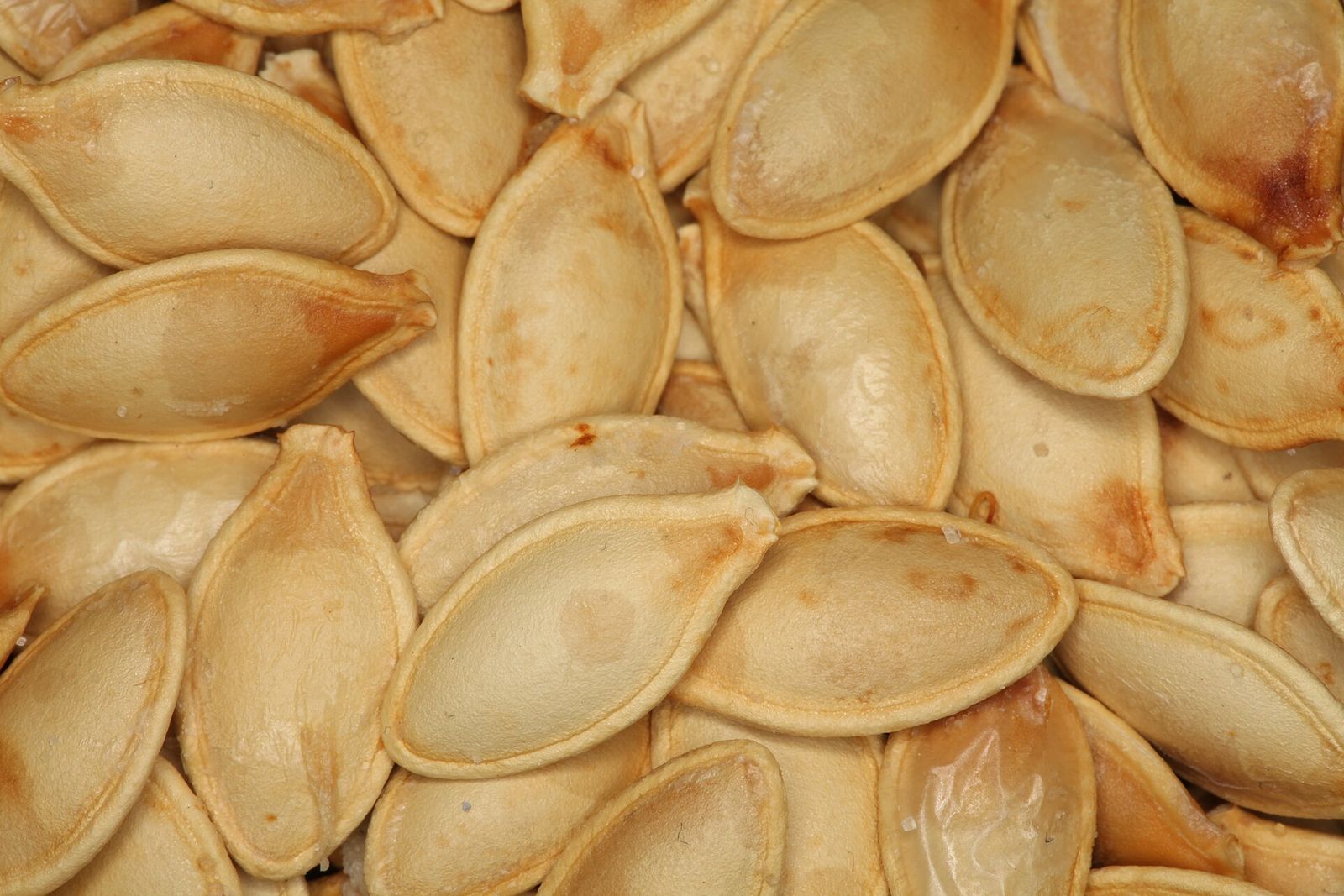
| Pumpkin seed kernels, roasted | 1 oz (28 g) | 156 mg | 550 mg |
| Atlantic mackerel, cooked | 140 g | 136 mg | 97 mg |
| Black beans, boiled | 1 cup (172 g) | 120 mg | 70 mg |
| Edamame, prepared | 1 cup (155 g) | 99 mg | 64 mg |
| Chia seeds, dried | 1 oz (28 g) | 95 mg | 335 mg |
| Brown rice, cooked | 1 cup (202 g) | 79 mg | 39 mg |
| Almonds | 1 oz (28 g) | 77 mg | 270 mg |
| Cashews, dry roasted | 1 oz (28 g) | 74 mg | 260 mg |
| Tofu, firm (made with calcium sulfate) | ½ cup (126 g) | 73 mg | 58 mg |
| Dark chocolate, 70–85% cocoa | 1 oz (28 g) | 65 mg | 228 mg |
| Soy milk, unfortified | 1 cup (243 g) | 61 mg | 25 mg |
| Peanut butter, smooth | 2 tbsp (32 g) | 54 mg | 168 mg |
| Whole-wheat bread | 2 slices (64 g) | 48 mg | 75 mg |
| Potato, baked with skin | 1 medium (173 g) | 48 mg | 28 mg |
| Avocado | 1 cup, cubed (150 g) | 44 mg | 29 mg |
| Salmon, Atlantic, farmed, cooked | 140 g | 42 mg | 30 mg |
| Oats, dry | ⅓ cup (27 g) | 37 mg | 138 mg |
| Yogurt, plain, low fat | 1 pot (170 g) | 29 mg | 17 mg |
| Banana | 1 small (101 g) | 27 mg | 27 mg |
| Milk, 2% fat | 1 cup (244 g) | 27 mg | 11 mg |
These are average values from laboratory analyses; brands, varieties and cooking change them.
What the list shows
- Seeds, nuts, beans and leafy greens lead. Per 100 g, pumpkin seeds contain the most magnesium on the list, but a cup of cooked spinach provides as much as a 28 g serving of the seeds.
- Ordinary meals add up. A 28 g serving of pumpkin seeds (156 mg), a cup of black beans (120 mg) and two slices of whole-wheat bread (48 mg) come to about 324 mg, more than the NHS figure for men.
- Dairy and fruit contribute less. Milk, yogurt and bananas provide useful amounts over a day but are modest per serving.
Food and supplements
The magnesium supplements in our comparisons provide 115–400 mg per serving: NOW’s glycinate gives 200 mg in two tablets, its citrate 400 mg in three capsules. That is the same order of magnitude as a couple of the servings above.
Two differences matter. The European Food Safety Authority’s upper level of 250 mg a day applies to magnesium from supplements, water and fortified foods, not to the magnesium naturally present in food. And the side effect health authorities highlight, diarrhoea, is linked to high doses from supplements: the NHS says taking more than 400 mg for a short time can cause it.
If you’re considering a supplement anyway, our guide to the types of magnesium supplements explains how the forms differ, and how to compare magnesium supplement labels shows what to check.
Sources
The research and official guidance this article draws on.
- Vitamins and minerals: Others (magnesium). NHS (checked )
- FoodData Central, SR Legacy (April 2018 release): magnesium and portion weights for food IDs 168463, 170557, 175120, 173735, 168411, 170554, 169704, 170567, 170571, 172475, 170273, 172446, 172470, 172688, 170093, 171705, 175168, 173904, 170886, 173944, 171267. U.S. Department of Agriculture (checked )
- Overview on Tolerable Upper Intake Levels as derived by the Scientific Committee on Food (SCF) and the EFSA Panel on Nutrition (Version 11). European Food Safety Authority, 2025 (checked )
- NOW Magnesium Glycinate (label 313608); NOW Magnesium Citrate (label 313576). NIH Dietary Supplement Label Database (checked )
This article is general information, not medical advice. Whether a supplement suits you depends on your health, diet and any medication you take, which a doctor or pharmacist can help you weigh up. Read our medical disclaimer.
Who wrote this
Nourlume is an independent online publication about supplements, skincare and everyday wellness. Pieces credited to Nourlume rather than a named writer follow our editorial policy, which explains how we research, source and update our work.