Buying guide
CoQ10 on iHerb: Ubiquinone and Ubiquinol Labels Compared
Six CoQ10 supplements on iHerb compared on their labels: ubiquinone or ubiquinol, 100 or 200 mg, plant-based or gelatin softgels, and what NCCIH says.
Affiliate links. Some links on this page are affiliate links: if you buy through them, Nourlume may earn a commission at no extra cost to you. Affiliate relationships do not determine our editorial conclusions. About affiliate links
Choose by situation
From the 6 labels compared below · no ratings, no “best”
Shown for the country your connection appears to come from (we don’t store it). iHerb sets the terms, so check that the discount applies at checkout. Affiliate link.
CoQ10 in a plant-based softgel
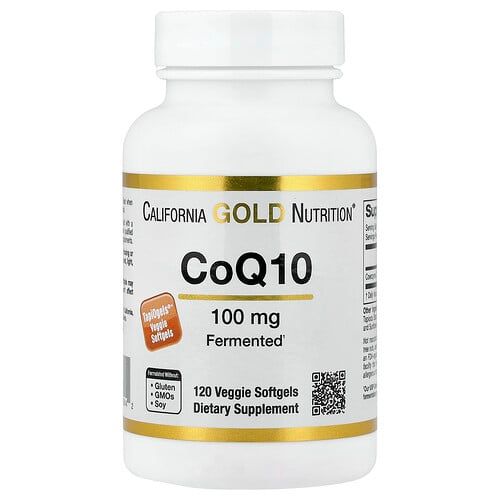
California Gold Nutrition CoQ10, 100 mg
100 mg ubiquinone in 1 softgel
A plant-based softgel with oil rather than gelatin; 120 servings per pack.
Vegan capsule, 100 mg
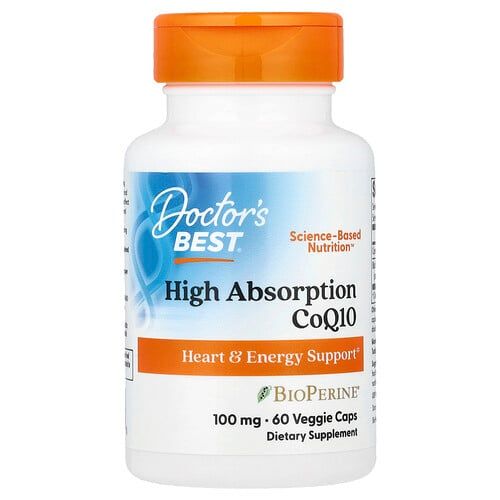
Doctor’s Best High Absorption CoQ10, 100 mg
100 mg ubiquinone in 1 capsule
Labelled vegan, with BioPerine black pepper extract. A dry powder, so the label suggests taking it with food.
200 mg in one capsule
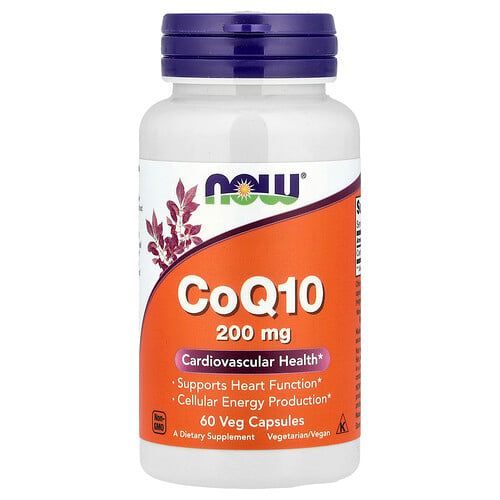
NOW Foods CoQ10, 200 mg
200 mg ubiquinone in 1 capsule
The most of the 3 ubiquinone labels here; labelled vegan.
Ubiquinol, 100 mg
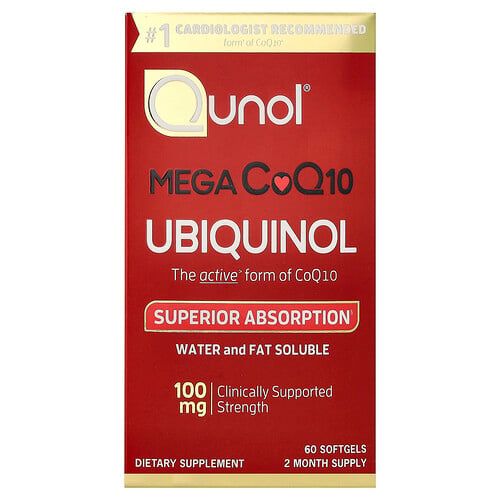
Qunol Mega CoQ10 Ubiquinol, 100 mg
100 mg ubiquinol in 1 softgel
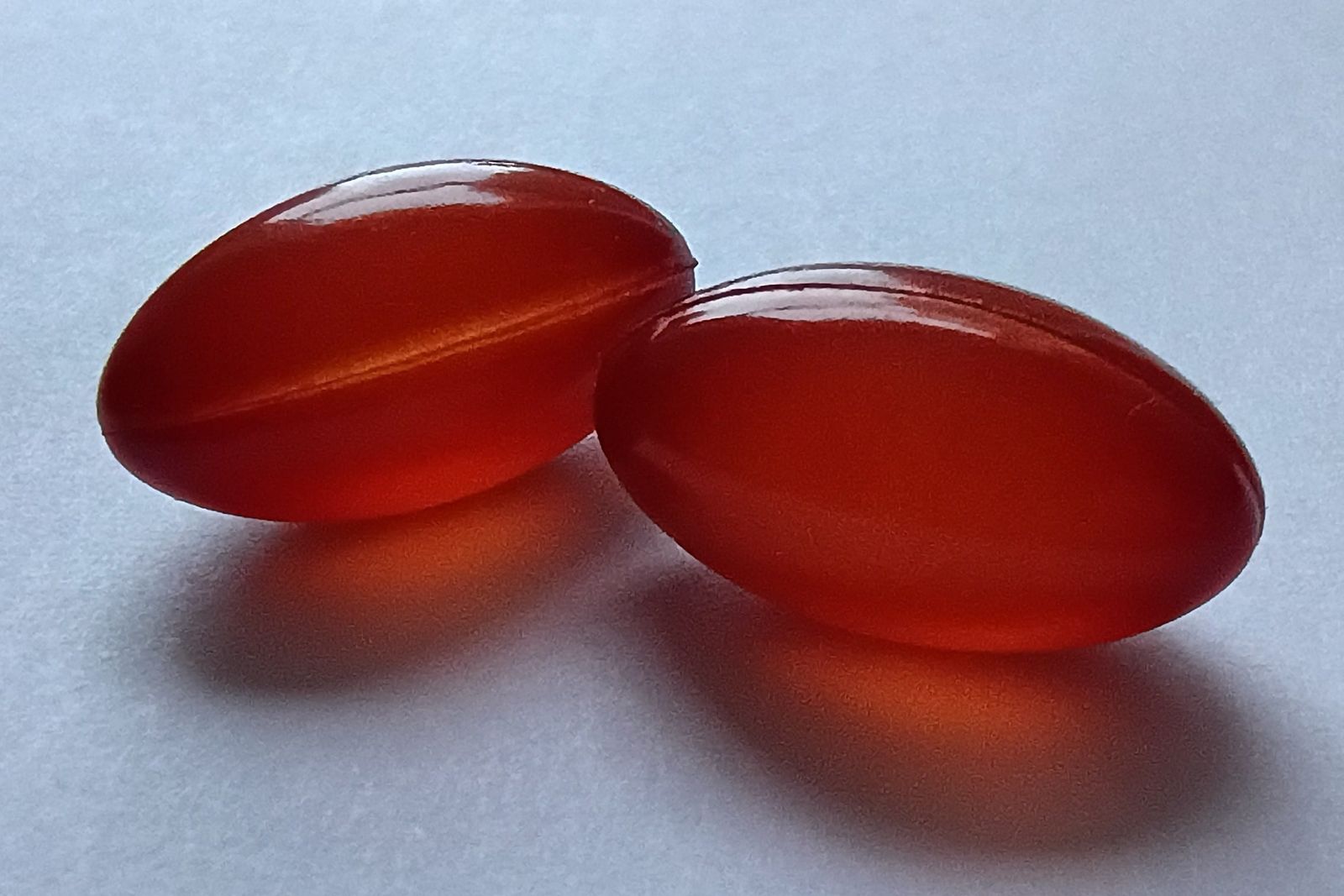
Ubiquinol, the reduced form of CoQ10 (Kaneka), in an oil-filled softgel.
Ubiquinol, 200 mg
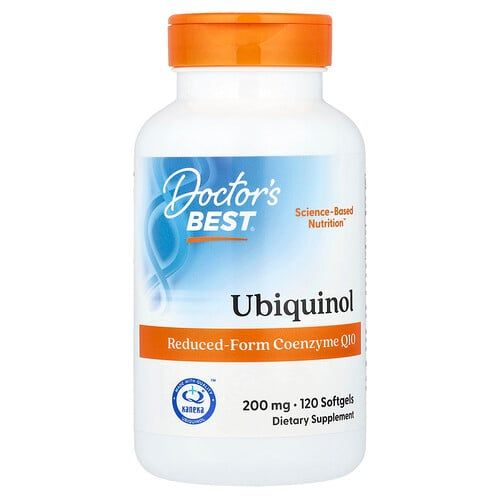
Doctor’s Best Ubiquinol with Kaneka Ubiquinol, 200 mg
200 mg ubiquinol in 1 softgel
The most of the 3 ubiquinol labels here; 120 servings per pack.
Each pick follows a fixed rule applied to the label facts (labels checked November 6, 2026); nothing here is paid for. Retailer buttons are affiliate links. Strengths and limitations of each product are further down.
How each pick is chosen
- CoQ10 in a plant-based softgel: Ubiquinone in a plant-based softgel (with oil); if several, the one with more servings per pack.
- Vegan capsule, 100 mg: Ubiquinone in a capsule labelled vegan, at 100 mg; if several, the one with more servings per pack.
- 200 mg in one capsule: The most ubiquinone per capsule, shown only when one product clearly leads.
- Ubiquinol, 100 mg: Ubiquinol at 100 mg per softgel; if several, the first in the table.
- Ubiquinol, 200 mg: The most ubiquinol per softgel, shown only when one product clearly leads.
In this article (5)
CoQ10 labels raise two questions before any other: ubiquinone or ubiquinol, and 100 or 200 mg. The labels also differ in something the front rarely mentions: whether the softgel is plant-based or gelatin, which matters for vegetarians and for orders to Korea. This guide lines up six CoQ10 supplements sold on iHerb by what their labels say.
We haven’t tested these products, and we don’t score or rank them. Where we give an opinion, we say so.
How we chose these six
- CoQ10 on its own, as ubiquinone or ubiquinol, in capsules or softgels. Blends with PQQ, fish oil, red yeast rice or hawthorn are left out.
- The choices you’ll meet: ubiquinone at 100 and 200 mg, ubiquinol at 100 and 200 mg, powder capsules and oil-filled softgels.
- Listed on iHerb (checked in iHerb’s product catalogue in November 2026) and with a published label record in the US National Institutes of Health’s Dietary Supplement Label Database.
The labels side by side
| Product | | | | | 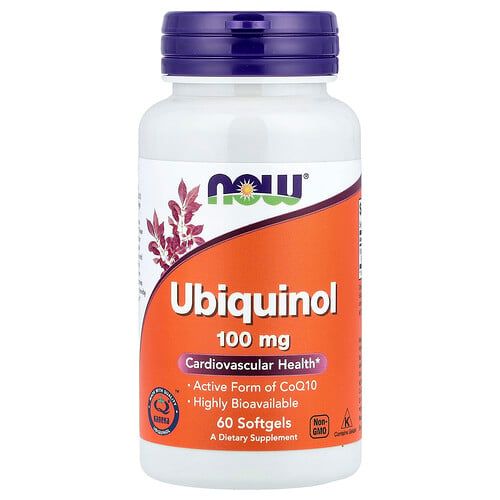 | |
|---|---|---|---|---|---|---|
| Serving size | 1 softgel | 1 veggie capsule | 1 veg capsule | 1 softgel | 1 softgel | 1 softgel |
| CoQ10 per serving | 100 mg (USP) | 100 mg, with BioPerine black pepper extract 5 mg | 200 mg | 100 mg Kaneka ubiquinol (with 6 mg vitamin C) | 100 mg ubiquinol | 200 mg Kaneka ubiquinol |
| Form of CoQ10 | Ubiquinone (standard CoQ10) | Ubiquinone (standard CoQ10) | Ubiquinone (standard CoQ10) | Ubiquinol (Kaneka) | Ubiquinol (Kaneka) | Ubiquinol (Kaneka) |
| Capsule type | Plant-based softgel (modified tapioca starch) with safflower oil | Vegetable capsule (powder, no oil) | Vegetable capsule (powder, no oil) | Gelatin softgel (animal source not stated) with MCT oil | Bovine gelatin softgel with MCT oil | Gelatin softgel (animal source not stated) with olive oil and MCT |
| Directions on the label | 1 softgel a day with food | 1 capsule a day, preferably with food | 1 capsule a day with a meal | 1 softgel a day, with or after a meal | 1 softgel a day with a fat-containing meal | 1 softgel a day with food |
| Servings per pack | 120 | 60 | 60 | 60 | 60 | 120 |
| Where to buy |
What the comparison shows
Ubiquinone or ubiquinol. Ubiquinone is the standard form of CoQ10 sold as a supplement; ubiquinol is its reduced form. California Gold Nutrition, Doctor’s Best (High Absorption) and NOW (200 mg) are ubiquinone. Qunol, NOW and Doctor’s Best (200 mg) are ubiquinol, and all three use Kaneka ubiquinol. Marketing often presents ubiquinol as the better-absorbed form. NCCIH’s summary doesn’t compare the two forms, so we don’t take a side.
100 or 200 mg. Four products give 100 mg per softgel or capsule; NOW’s ubiquinone capsule and Doctor’s Best’s ubiquinol softgel give 200 mg. All six suggest one a day, with food or with a meal; NOW’s ubiquinol label asks for a fat-containing meal.
Powder or oil. CoQ10 is fat-soluble. The two NOW and Doctor’s Best ubiquinone capsules are dry powder in a vegetable capsule (Doctor’s Best adds 5 mg of BioPerine black pepper extract); the four softgels hold CoQ10 in oil: safflower oil, medium-chain triglycerides or olive oil.
Plant-based or gelatin. California Gold Nutrition uses a plant-based softgel made from tapioca starch, and the NOW and Doctor’s Best ubiquinone capsules are vegan. All three ubiquinols are gelatin softgels: NOW’s says bovine gelatin, Qunol and Doctor’s Best don’t name the animal. iHerb doesn’t ship products with bovine gelatin to Korea.
What the research says. NCCIH notes that CoQ10 hasn’t been shown to treat cancer, that results for preventing heart disease and for heart failure are inconclusive, and that the overall evidence doesn’t support the idea that CoQ10 reduces muscle pain caused by statins. It also reports that CoQ10 may reduce the risk of some complications of heart surgery. No serious side effects have been reported; mild ones such as insomnia or digestive upset may occur. CoQ10 may interact with warfarin and insulin, and may not be compatible with some cancer treatments.
The products
100 mg, plant-based softgel
California Gold Nutrition
CoQ10, 100 mg
120 veggie softgels
iHerb’s own-brand 100 mg CoQ10 in a plant-based softgel.
- Serving size
- 1 softgel
- CoQ10 per serving
- 100 mg (USP)
- Form of CoQ10
- Ubiquinone (standard CoQ10)
- Capsule type
- Plant-based softgel (modified tapioca starch) with safflower oil
- Directions on the label
- 1 softgel a day with food
- Servings per pack
- 120
- Other ingredients
- Safflower oil, modified tapioca starch, glycerin, purified water, maltitol, sunflower lecithin
Key facts
- iHerb’s own brand: 100 mg of CoQ10 in a plant-based softgel with oil.
- 120 softgels, one a day.
Worth weighing up
- Standard ubiquinone, not ubiquinol.
100 mg, vegan capsule + BioPerine
Doctor’s Best
High Absorption CoQ10, 100 mg
60 veggie capsules
A vegan 100 mg CoQ10 capsule with black pepper extract.
- Serving size
- 1 veggie capsule
- CoQ10 per serving
- 100 mg, with BioPerine black pepper extract 5 mg
- Form of CoQ10
- Ubiquinone (standard CoQ10)
- Capsule type
- Vegetable capsule (powder, no oil)
- Directions on the label
- 1 capsule a day, preferably with food
- Servings per pack
- 60
- Other ingredients
- Rice powder, hypromellose (capsule), magnesium stearate, silicon dioxide
Key facts
- 100 mg of CoQ10 with 5 mg of BioPerine black pepper extract.
- Vegan, according to the label.
Worth weighing up
- A dry powder capsule: the label suggests taking it with food.
- 60 capsules.
A vegan 200 mg CoQ10 capsule.
- Serving size
- 1 veg capsule
- CoQ10 per serving
- 200 mg
- Form of CoQ10
- Ubiquinone (standard CoQ10)
- Capsule type
- Vegetable capsule (powder, no oil)
- Directions on the label
- 1 capsule a day with a meal
- Servings per pack
- 60
- Other ingredients
- Rice flour, hypromellose (capsule), ascorbyl palmitate, magnesium stearate, silicon dioxide
Key facts
- 200 mg of ubiquinone in one vegetable capsule.
- Vegetarian/vegan according to the label.
Worth weighing up
- A dry powder capsule: the label suggests taking it with a meal.
- 60 capsules.
A 100 mg Kaneka ubiquinol softgel.
- Serving size
- 1 softgel
- CoQ10 per serving
- 100 mg Kaneka ubiquinol (with 6 mg vitamin C)
- Form of CoQ10
- Ubiquinol (Kaneka)
- Capsule type
- Gelatin softgel (animal source not stated) with MCT oil
- Directions on the label
- 1 softgel a day, with or after a meal
- Servings per pack
- 60
- Other ingredients
- Medium-chain triglycerides (palm oil), polysorbate 80, gelatin, glycerin, sorbitol, purified water, annatto
Key facts
- Kaneka ubiquinol, 100 mg per softgel in MCT oil.
Worth weighing up
- A gelatin softgel; the label doesn’t say which animal the gelatin comes from.
- 60 softgels.
A 100 mg Kaneka ubiquinol softgel in bovine gelatin.
- Serving size
- 1 softgel
- CoQ10 per serving
- 100 mg ubiquinol
- Form of CoQ10
- Ubiquinol (Kaneka)
- Capsule type
- Bovine gelatin softgel with MCT oil
- Directions on the label
- 1 softgel a day with a fat-containing meal
- Servings per pack
- 60
- Other ingredients
- Medium-chain triglyceride oil, bovine gelatin, glycerin, water, carob, beeswax
Key facts
- Kaneka ubiquinol, 100 mg per softgel.
Worth weighing up
- Bovine gelatin softgel: not suitable for vegetarians, and iHerb doesn’t ship products with bovine gelatin to Korea.
- 60 softgels.
Ubiquinol 200 mg, 120 softgels
Doctor’s Best
Ubiquinol with Kaneka Ubiquinol, 200 mg
120 softgels
A 200 mg Kaneka ubiquinol softgel in a 120-count bottle.
- Serving size
- 1 softgel
- CoQ10 per serving
- 200 mg Kaneka ubiquinol
- Form of CoQ10
- Ubiquinol (Kaneka)
- Capsule type
- Gelatin softgel (animal source not stated) with olive oil and MCT
- Directions on the label
- 1 softgel a day with food
- Servings per pack
- 120
- Other ingredients
- Extra virgin olive oil, medium-chain triglycerides, sunflower lecithin, beeswax, rosemary leaf extract, gelatin, glycerin, purified water, annatto
Key facts
- The most ubiquinol per softgel here: 200 mg of Kaneka ubiquinol.
- 120 softgels.
Worth weighing up
- A gelatin softgel; the label doesn’t say which animal the gelatin comes from.
What a label can’t tell you
Whether you need it. CoQ10 is naturally present in the body, and NCCIH describes the evidence for most uses as limited or inconclusive. If you take warfarin, insulin or a statin, or are being treated for cancer, talk to your doctor before taking CoQ10, and don’t change a prescribed medicine because of a supplement.
Price. Prices vary by country and change often, so we don’t list them. Compare the price per 100 mg: divide the price by the number of softgels or capsules, then by the milligrams in each, and multiply by 100.
Sources
The research and official guidance this article draws on.
- California Gold Nutrition CoQ10 100 mg, 120 veggie softgels (label 273833). NIH Dietary Supplement Label Database (checked )
- Doctor’s Best High Absorption CoQ10 100 mg, 60 veggie capsules (label 302671). NIH Dietary Supplement Label Database (checked )
- NOW CoQ10 200 mg, 60 veg capsules (label 314119). NIH Dietary Supplement Label Database (checked )
- Qunol Mega CoQ10 Ubiquinol 100 mg, 60 softgels (label 328859). NIH Dietary Supplement Label Database (checked )
- NOW Ubiquinol 100 mg, 60 softgels (label 314154). NIH Dietary Supplement Label Database (checked )
- Doctor’s Best Ubiquinol with Kaneka Ubiquinol 200 mg, 120 softgels (label 302712). NIH Dietary Supplement Label Database (checked )
- Coenzyme Q10. National Center for Complementary and Integrative Health (NCCIH) (checked )
This article is general information, not medical advice. Whether a supplement suits you depends on your health, diet and any medication you take, which a doctor or pharmacist can help you weigh up. Read our medical disclaimer.
Who wrote this
Nourlume is an independent online publication about supplements, skincare and everyday wellness. Pieces credited to Nourlume rather than a named writer follow our editorial policy, which explains how we research, source and update our work.